


Share:
Home Building Guide
Our Products
Useful Tools
Home Building Guide
Products
Ultratech Building Products
Share:
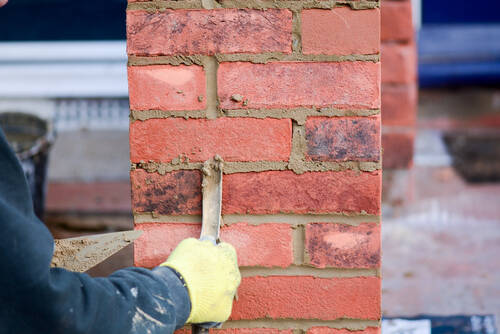
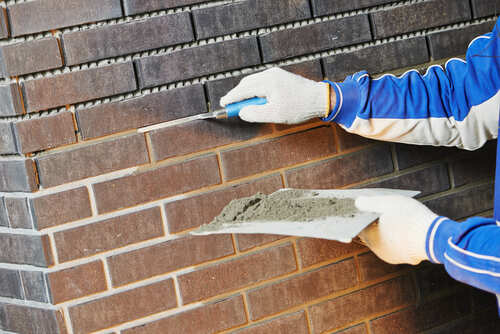
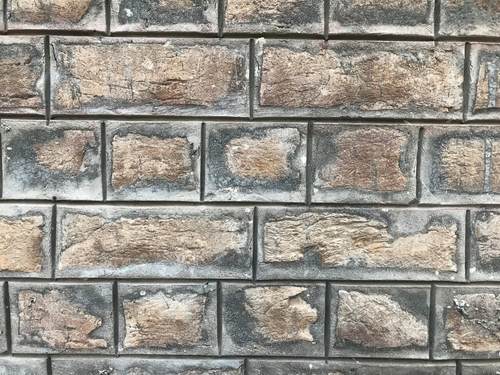
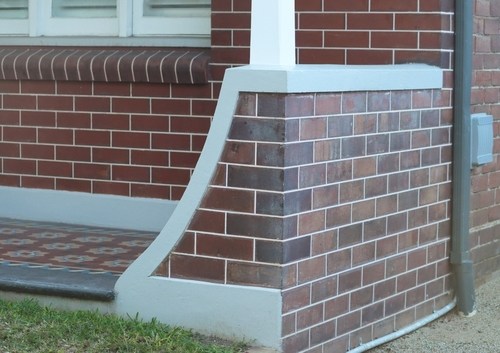
Pointing is the process of filling joints between bricks or stones with mortar to enhance strength and appearance. Efficient pointing improves the appearance of your home and protects it from weathering and decay.
In this blog, we’ll explore what pointing is, its types, benefits, and purposes, giving you a clear understanding of its role in construction, whether you're a builder, homeowner, or curious learner.
Surface preparation is essential for achieving strong pointing in masonry work. It ensures that the new mortar bonds well with the existing surface and provides protection and finish. Here are the key steps involved in preparing the surface:
The existing mortar in the joints must be raked out to a depth of 10 to 20 mm using a pointing tool or chisel. This removes any loose mortar and creates space for the new mortar.
Once the joints are raked out, they should be cleaned using a wire brush to remove dust or loose particles. Compressed air or water can also be used for a deeper clean.
The masonry surface should be washed with clean water to remove any remaining dust or salts. This helps in preventing the dry surface from absorbing water from the fresh mortar.
Before applying the new mortar, the cleaned joints should be lightly moistened. This step creates better bonding and prevents rapid drying, which can lead to cracking or poor adhesion.
The surface should be checked to make sure it is clean, damp (not wet), and free from any oil, grease, or chemical contaminants that may affect mortar performance.
Tip: Keep the joints moist before and after pointing to prevent the mortar from drying too quickly and cracking.
Pointing in construction includes various techniques, each with its own unique visual appeal and benefits. Let's explore some of the types of pointing used in masonry.
In flush pointing, the raked mortar joints are filled with mortar, and excess mortar is removed, resulting in a smooth finish. The mortar joint is pressed closely to the face of the brick or stone masonry. By eliminating spaces that can accumulate dust or water, flush pointing helps improve the longevity and cleanliness of the structure.
Recessed pointing involves filling the raked mortar joints with mortar and pressing it into the wall surface using an ideal tool. This technique creates a depth of around 5 mm or more while keeping the pointing face vertical.
Beaded pointing involves pressing mortar into the masonry joint and creating hollow grooves using a steel tool with a concave shape. This results in a mortar joint with a beaded appearance. It should be noted that this type of pointing is more likely to damage compared to other techniques.
Struck pointing involves a two-step process. First, the mortar is filled and pressed to match the face of the brick masonry work. Then, the top edge of the joint is pressed inward, creating a slope of approximately 10 mm compared to the bottom corner. This sloping effect allows rainwater to drain off, minimising water collection on the masonry surface.
Rubbed, keyed, or grooved pointing is a type of pointing in which the raked joint is filled with mortar and levelled closely with the face of the brick or stone masonry. However, what sets it apart is the addition of a groove formed at the centre using a specialised tool called a pointer.
Tuck pointing involves filling the raked joint with mortar and creating a groove at the centre of the joint. The groove is made with specific dimensions, typically 5 mm in width and 3 mm in depth. What sets tuck pointing apart is the next step of filling or "tucking" the groove with white cement putty, leaving a small projection of about 3 mm.
Tip: Precision is everything; the contrasting thin “tuck” line should be straight and clean.
The process begins by filling and pressing mortar into the joint. The next step is forming a V-shaped groove within the joint. This groove is created using a specialised tool shaped like a V, which gives the technique its name.
In weathered pointing mortar, the mortar is pressed into a joint, and while it is still fresh, the top portion of the horizontal joints is pressed back by 3-6 mm using a pointing tool. This creates a sloping effect from the top of the joint to the bottom, giving the appearance of weathered or worn-down edges.
Here are some key benefits of the various types of pointing in construction:
1. Improves structural integrity, creating a stronger building.
2. Provides weatherproofing, protecting external walls from moisture.
3. Restores the appearance of the building, improving its aesthetics.
4. Increases the value of your property, making it more desirable.
5. Reduces ongoing maintenance needs, saving time and costs.
Here are the key purposes of pointing:
Pointing protects mortar joints from the damage caused by the atmosphere.
Pointing improves the appearance of the wall, highlighting the pattern, thickness, colours, and texture of the joints.
Pointing helps seal gaps and prevents rainwater or dampness from entering the masonry.
By filling and reinforcing mortar joints, pointing adds strength and stability to the masonry construction.
Mortar is a mixture used in construction to bind building blocks like bricks or stones. Here are the most commonly used types of binders:
Lime mortar is prepared by mixing fat lime, fine sand, and water, usually in the ratio of 1:2 or 1:3. This mortar sets slowly, giving workers more time for adjustments and making it suitable for structures that need to handle movements without cracking. It also helps prevent moisture buildup in walls.
Cement mortar is made by blending cement, sand, and water, typically in a 1:3 ratio. It hardens quickly and offers high strength, making it ideal for load-bearing walls and high-rise structures. Its durability and moisture resistance make it suitable for both internal and external applications. However, it lacks the flexibility of lime mortar and is more likely to crack under structural shifts.
Tip: Use the right mortar mix, making sure it is compatible with the original masonry to avoid cracks or moisture issues.
Pointing plays an important role in protecting and improving the appearance of your masonry by filling the gaps between bricks with the correct mortar. Choosing the appropriate type of pointing and mortar makes sure your walls remain strong and durable.
Since your home is your identity, investing in quality pointing safeguards its structure and reflects the care and pride you take in your living space.
In conclusion, pointing in construction is crucial for enhancing structural integrity, providing weatherproofing, restoring appearance, and reducing maintenance. Choosing the right types of pointing techniques and mortar is essential for long-lasting and aesthetically pleasing results in brick or stone structures.
Brick pointing is the process of filling and finishing the gaps between bricks with mortar. It strengthens the wall, prevents water penetration, and improves the appearance of the masonry.
The most common pointing device is a pointing tool. It is designed to compact and shape the mortar in brick joints for a neat finish.
The best type of pointing depends on the structure and purpose, but flush pointing is widely used for its durability and clean look.
For pointing, Ordinary Portland Cement (OPC) mixed with sand (and often a bit of lime) is commonly used because of its strength and quick setting time. For restoration work or older lime-based structures, a more lime-rich mortar may be better due to its greater flexibility and breathability.
Lime pointing feels softer and more flexible, often with a chalky texture, while cement pointing is harder and more rigid. You can also notice colour differences; lime mortar seems lighter or off-white, whereas cement mortar is usually grey.