


Share:
Home Building Guide
Our Products
Useful Tools
Home Building Guide
Products
Share:
The plastering ratio decides the strength, finish, and durability of plaster work.
The correct cement-sand ratio for plastering helps prevent cracks and surface damage.
Choosing the right cement for plastering improves bonding and smoothness.
Proper plaster thickness for walls ensures consistent coverage and long life.
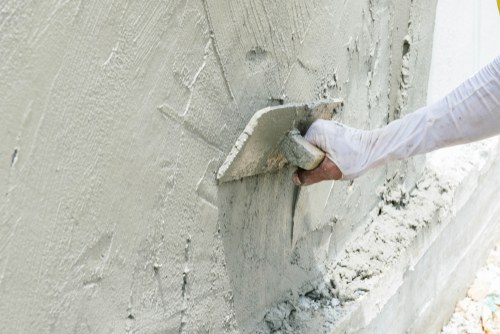
The plastering ratio is the amount of cement, sand, and water used to prepare plaster mortar. This ratio affects the strength, smoothness, and durability of plaster.
A common cement-sand ratio for plastering is 1:4 or 1:5, depending on wall location and surface condition. Using the correct cement for plastering ensures better adhesion and a clean cement plaster finish.
The correct plastering ratio ensures:
Strong bonding with the brick or block surface
Reduced chances of cracks and peeling
Better resistance to moisture and weather
Wrong ratios can increase repair costs and raise the plaster rate per sq ft due to rework.
Tip: Exterior walls usually need a stronger plastering ratio than interior walls.
A balanced cement-sand-water ratio for plastering gives:
Smooth surface
Even colour
Proper setting time
Too much cement can cause shrinkage cracks, while too much sand reduces strength.
Tip: Never add extra water to dry plaster mix on site, as it weakens plaster.
Good plaster work depends on the quality of materials used. Even if the plastering ratio is correct, poor-quality materials can lead to cracks, weak bonding, uneven surfaces, and early damage. To achieve a smooth, long-lasting, and strong plaster finish, it is important to understand each material used in plastering and its role in the mix.
Cement is the main binding material in plaster. It holds sand particles together and helps the plaster stick to brick or concrete surfaces. Using the best cement for plaster improves workability, gives a smooth cement plaster finish, and provides proper strength after setting. Fresh cement reacts better with water and provides consistent results during plaster application.
Old or moisture-exposed cement can cause weak plaster, powdery surfaces, and poor binding, which increases repair costs later.
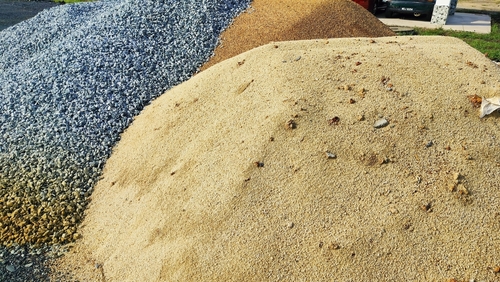
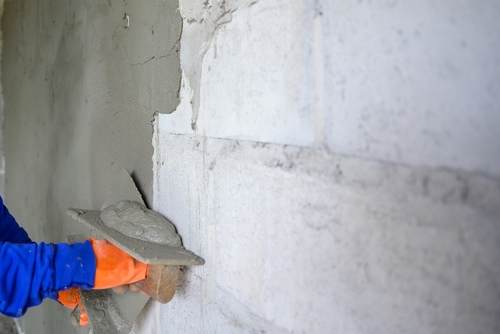
Sand acts as the filler material in plaster and gives weight to the mix. Clean, well-graded sand improves surface smoothness and helps achieve an even plaster thickness. Sand with excess silt, clay, or organic matter weakens plaster and affects the final cement plaster finish.
The grain size of sand also matters. Very rocky sand makes the surface rough, while very fine sand can increase shrinkage cracks.
Water activates cement and allows proper mixing of materials. Maintaining the correct cement-sand-water ratio for plastering is important for strength and durability. Too little water makes plaster difficult to apply, while too much water reduces strength and increases cracking after drying.
Water quality also affects plaster performance. Contaminated or salty water can reduce bonding and cause surface stains.
Lime is sometimes added to plaster mixes to improve flexibility and workability. It reduces shrinkage cracks and allows plaster to make small movements in the wall. Lime also improves surface smoothness and helps plaster breathe, reducing trapped moisture.
Lime plaster is not commonly used in modern construction, but it is still useful in traditional buildings and specific applications.
Gypsum plaster is a ready-to-use material that sets quickly and provides a very smooth finish. It is mainly used for internal walls and ceilings where fast completion is required. Gypsum plaster does not require curing and saves time during construction.
However, gypsum is not great against moisture and loses strength in damp conditions.
Correct calculation of the cement-sand ratio for plastering is important to control cost, avoid material waste, and get the right plaster thickness for walls. Many plastering problems, like cracks, uneven surfaces, or weak plaster, happen because calculations are rushed or guessed. A step-by-step approach helps achieve strong, smooth, and long-lasting plaster work.
Start by measuring the length and height of each wall that needs plastering. Multiply these to get the total wall area in square feet or square metres. This area helps you get the total material requirement and calculate the plaster rate per sq ft correctly.
For correct results, measure each wall separately, especially if the room has different wall sizes. Always subtract areas that will not be plastered, such as doors, windows, and large openings. Skipping this step often leads to buying extra material and higher costs.
Plaster thickness plays an important role in surface strength and finish quality. Using the right thickness helps with proper bonding and prevents early damage.
Standard plastering thickness guidelines are:
1. Internal walls: 12 mm
2. External walls: 15–20 mm
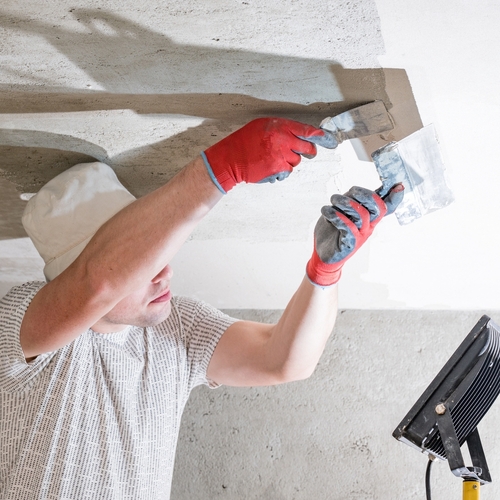
3. Ceiling plaster: 6–10 mm
Maintaining the correct plaster thickness for walls ensures an even surface and reduces the chances of shrinkage cracks. Very thick plaster increases material cost and load, while thin plaster can peel off over time.
Different parts of a building need different plaster strengths. The cement-sand ratio for plastering should be selected based on exposure to weather and load conditions.
Common plaster mix ratios include:
1. Internal walls: 1:6 (cement: sand)
2. External walls: 1:4
3. Ceiling plaster: 1:3
Stronger ratios contain more cement and provide better resistance to moisture and impact. Weaker ratios are suitable for protected indoor areas where flexibility is more important than strength.
Once the area and thickness are known, calculate the amount of plaster needed by multiplying the area by the thickness. This gives the wet mortar volume. To find dry material quantities, increase the volume to account for shrinkage.
Split the total volume into cement and sand based on the chosen plastering ratio. Cement is usually calculated in bags, while sand is measured in cubic feet or cubic metres.
The quantity of cement, sand, and water used in plastering depends on the selected plastering ratio and the area to be covered. Each mix ratio has a specific purpose and cost impact. Choosing the right combination helps achieve good strength, smooth cement plaster finish, and controlled plaster rate per sq ft.
The 1:3 plastering ratio contains more cement, making it the strongest mix used in plaster work. It is mainly applied in areas exposed to moisture, impact, or frequent wear, such as ceilings, bathrooms, staircases, and external bands.
Because of the higher cement content, this mix provides excellent bonding and durability. But it increases material cost and requires careful curing to avoid shrinkage cracks.
Water requirement: Moderate, just enough to achieve workable consistency
Cost impact: High due to increased cement use
The 1:5 cement-sand ratio for plastering is commonly used because it balances strength, durability, and economy. It provides a smooth finish while maintaining good binding to brick or block surfaces.
This mix is suitable for both internal walls and moderately exposed external walls. It reduces cement consumption compared to 1:3 while still delivering great performance.
Water requirement: Slightly higher than 1:3 for smooth workability
Cost impact: Moderate and cost-efficient
The 1:6 plastering ratio is the most economical option and is commonly used for internal walls where weather exposure is minimal. It offers enough strength for interior finishes and reduces overall construction cost.
While this mix saves cement, it must be mixed properly to ensure good bonding and prevent powdery surfaces.
Water requirement: Slightly higher to maintain workability
Cost impact: Low and budget-friendly.
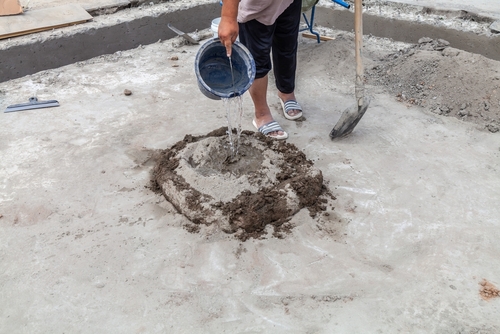
Water plays an important role in plaster quality. The correct cement-sand-water ratio for plastering allows for smooth application and proper setting. Too much water reduces strength, while too little makes plaster difficult to apply.
Always add water gradually and mix completely for a plastic, workable paste.
Tip: Always prepare small test batches before full application to check consistency, finish, and setting time.
Understanding the plastering ratio is key to quality construction. The right cement-sand ratio for plastering, proper plastering thickness, and suitable cement for plastering help you get strong, crack-free walls and reduce future repair costs.
When plaster work is planned and carried out well, the cement plaster finish becomes smooth, durable, and paint adheres better and lasts longer.
Plaster is mixed using cement, sand, and water in a fixed plastering ratio depending on the wall type and location.
The standard cement-sand ratio for plastering is usually 1:4 or 1:6.
A 1:3 ratio is commonly used for ceiling plaster for better grip.
Cement quantity depends on plastering thickness and ratio, usually 1 to 1.5 bags for 12 mm thickness.
Single-coat plaster usually uses a stronger cement-sand ratio for plastering, like 1:4.