


Share:
Home Building Guide
Our Products
Useful Tools
Home Building Guide
Products
Share:
Micro concrete is a highly flowable, non-shrink, high-early-strength polymer-modified material ideal for structural repairs and thin sections.
The difference between micro concrete vs normal concrete lies in maximum aggregate size, application thickness, compressive strength kinetics, and workability.
Micro concrete flooring and micro cement wall finishes are popular for modern interiors.
It requires less water, is easy to apply, and ensures uniform structural strength.
It is suitable for structural repairs and decorative applications like microcement bathroom designs.
Micro concrete is a ready-to-use, cement-based material made with graded ultra-fine aggregates (typically under 2.2mm), silica fume, polycarboxylate-based superplasticisers, and additives. Unlike traditional concrete, it exhibits self-compacting properties and flows easily into tight spaces without the need for mechanical vibration.
It is commonly used in areas where conventional concrete cannot be placed easily, such as concrete section restoration, structural jacket underpinning, grouting, and thin sections. Micro concrete cement ensures high early compressive strength, minimal permeability, a smooth finish, and uniform application, making it ideal for modern construction needs.
Before choosing between the two, understanding their core differences in composition, application, and performance can help make an informed decision. Understanding micro concrete vs normal concrete helps you choose the right material for your project:
1. Composition: Micro concrete uses finer, precisely graded sand and micro-aggregates (< 2.2mm) and incorporates shrinkage-compensating agents, compared to normal concrete, which relies on coarse aggregates up to 20mm or larger.
2. Workability: Flows easily due to built-in chemical admixtures, achieving self-levelling performance without vibration.
3. Application: Ideal for high-precision structural rehabilitation, honeycombing patches, and thin layers, unlike the heavy, bulk structural use of normal concrete.
4. Thickness: Suitable for thin sections like micro plaster or overlays where traditional 50mm+ concrete would fracture or fail to bond.
5. Finish: Provides smoother, denser, and more uniform surfaces with minimal capillary pores.
While normal concrete is used for foundations and slabs, micro concrete is preferred where precision and finish matter.
Its increasing use in modern construction is driven by a combination of performance benefits and application flexibility, as explained below.
From structural repairs to decorative finishes like micro cement wall and micro concrete flooring, micro concrete is highly versatile.
Micro concrete comes as a pre-mixed product, ensuring consistent quality and reducing on-site errors.
It requires an exceptionally low and strictly controlled water addition, which improves strength and reduces shrinkage cracking caused by excess water evaporation.
Rapid early strength gain (often exceeding 20-30 MPa within 24 hours) and easy application make it suitable for fast-track projects and renovations.
To fully understand its practical value, let’s explore how micro concrete is used across different residential and commercial applications. Micro concrete is widely used in both residential and commercial projects due to its versatility and smooth finish. From structural applications to modern interior designs, it offers practical as well as aesthetic benefits.
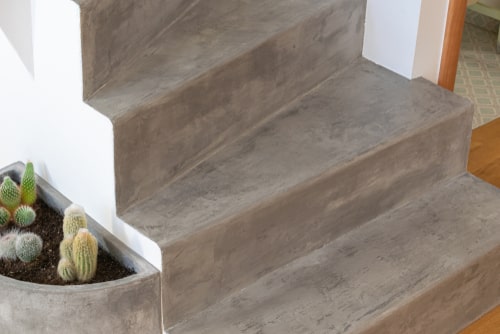
Micro concrete flooring provides a seamless, durable, and low-maintenance surface, making it ideal for modern homes and commercial spaces.
While micro cement flooring is preferred for high-traffic areas due to its strength, micro plaster is commonly used for walls and decorative interior finishes.
Micro cement wall finishes create a smooth, contemporary look, enhancing the overall design of living spaces, offices, and retail environments.
Microcement is well-suited for bathrooms and wet areas, offering a seamless, water-resistant surface that is both functional and visually appealing.
Proper application plays a crucial role in achieving the desired strength, finish, and durability, which is why following a systematic process is essential.
Step 1: Surface Preparation: Clean the surface thoroughly, removing dust, grease, and loose particles. Mechanically roughen the base concrete to create a mechanical key, and pre-saturate the substrate to a Saturated Surface Dry (SSD) condition to prevent it from drawing moisture out of the fresh mix.
Step 2: Mixing: Mix the micro concrete cement with the recommended amount of water using a mechanical shear mixer (drill and paddle) until a flowable consistency is achieved. Technical Warning: Never add extra water beyond the datasheet limits, as this causes mix segregation and drops ultimate strength.
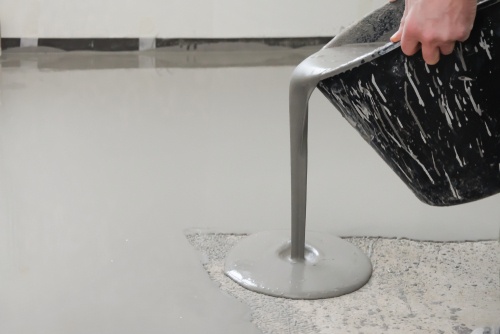
Step 3: Pouring: Pour the mix evenly into the required area, ensuring proper flow into gaps or thin sections. Pour continuously from one side only to avoid trapping air pockets or creating cold joints.
Step 4: Curing and Finishing for Better Durability: Allow proper curing to achieve maximum strength and finish. Smooth finishing enhances durability and appearance.
Beyond its ease of use, micro concrete offers several performance advantages that make it a reliable choice for both structural and decorative applications. Micro concrete cement offers several performance benefits, making it suitable for both repair work and modern finishes. Its properties help improve durability, strength, and overall surface quality.
Micro concrete offers a uniform, crack-resistant surface with a smooth finish due to built-in shrinkage-compensating polymers.
Perfect for repair works, overlays, and applications where traditional concrete cannot be used.
Despite its fine composition, it delivers excellent ultimate compressive strength (often reaching M50 to M60 grades within 28 days) and long-term performance.
Controlled shrinkage improves interfacial shear bond strength with old concrete and reduces the risk of cracks.
Choosing micro concrete for your construction or repair work helps ensure strength, precision, and a long-lasting finish. Whether you are working on structural repairs, micro concrete flooring, or modern designs like a micro cement wall or microcement bathroom, this material offers both performance and aesthetics.
By understanding its benefits and using it correctly, you can achieve durable results with minimal maintenance. Consult your builder to select the right application and make the most of micro concrete in your project.
Micro concrete can be applied on concrete, masonry, and properly prepared existing surfaces. The surface should be clean, stable, and free from dust or grease for better bonding.
Micro concrete is highly dense and water-resistant but not fully waterproof on its own. For areas like bathrooms or wet zones, an additional elastomeric or polyurethane waterproof coating/membrane is recommended.
Micro concrete is typically applied in thin sections. The standard structural thickness ranges from 12mm to 50mm per lift. For sections thicker than 50mm, clean, graded 6mm to 10mm silt-free coarse aggregates can be added to control the heat of hydration, depending on the manufacturer's engineering specification.
Yes, micro concrete is suitable for both flooring and wall applications. It is commonly used for micro concrete flooring and decorative finishes, such as micro cement walls.
Micro concrete contains fine structural sand/aggregates and is engineered for load-bearing structural repairs and strength-based applications. Micro cement is a micro-fine paste without aggregates, better suited for ultra-thin (2-3mm) decorative architectural finishes, such as micro cement flooring and wall coatings.