


Share:
Home Building Guide
Our Products
Useful Tools
Home Building Guide
Products
Ultratech Building Products
Share:
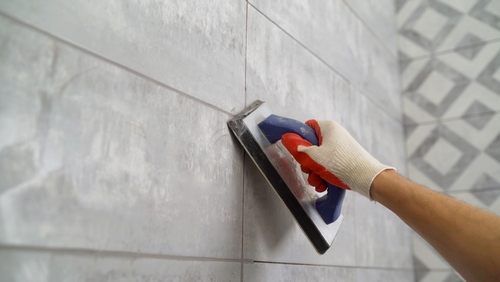
After you place tiles, small gaps remain between them. Grout fills these gaps and gives the tiled surface a neat, finished look. It also helps protect tile edges from dirt and everyday wear.
Different types of grout exist, but cement grout and epoxy grout are two common choices. Knowing how each one works can help you avoid repairs later.
Cement grout uses cement, water and, in some cases, fine sand. You can mix and apply it more easily, making it a common choice for regular tile work.
However, cement grout has tiny pores that can absorb moisture and stains. Proper sealing can help protect it, especially in areas that get wet regularly.
Epoxy grout is made with resin, a hardener, and filler. These ingredients create a dense grout that resists water, stains and many chemicals. This makes epoxy grout useful in places where grout faces frequent moisture, spills or heavy use.
Did You Know? Epoxy grout resists stains and water better than regular cement grout, making it useful for areas that face frequent spills and moisture. |
The table below helps you quickly compare both options and decide which grout best suits your tiling needs.
Feature | Cement Grout | Epoxy Grout |
Water resistance | Lower unless sealed | High |
Stain resistance | Moderate | High |
Maintenance | Higher | Lower |
Ease of application | Easier to work with | Needs more care |
Cost | Usually more affordable | Usually higher |
Now that you know how both options work, choosing the right one becomes easier. For regular rooms and areas with normal use, cement grout can be a practical choice. For areas exposed to frequent water, stains, spills or strong cleaning products, epoxy grout can offer added protection and make cleaning easier.
If you want tile joints that are easier to maintain and more resistant to stains and moisture, epoxy grout can be a suitable option. Its hard surface also handles regular use well, making it a good choice for areas where tiles see heavy daily use.
Epoxy grout resists moisture, stains, and chemicals better, but cement grout costs less and works well for many regular applications.
Epoxy grout uses resin and a hardener, while cement grout uses a cement-based mixture.
Yes. Epoxy grout works well in bathrooms because it resists moisture and stains.
Epoxy grout generally needs less maintenance because it resists stains and usually doesn't need sealing. Cement grout may need more care, especially in areas exposed to moisture and dirt.