


Share:
Home Building Guide
Our Products
Useful Tools
Home Building Guide
Products
Ultratech Building Products
Share:
Concrete doesn’t react to deadlines, but it reacts very quickly to heat.
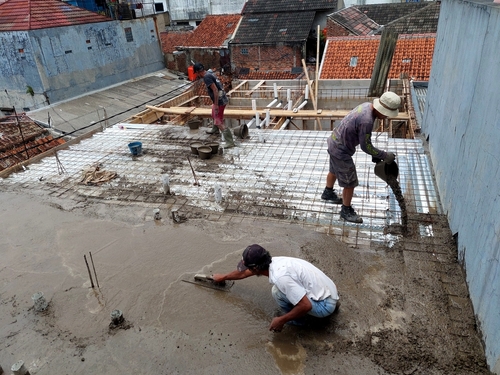
Hot weather concreting refers to any concreting work carried out when the temperatures are above 35°C, humidity is low, or winds are strong. In Indian summers, all three conditions often occur together, making concreting in hot weather one of the most critical challenges in home construction.
High temperatures speed up water evaporation from the concrete mix, reducing the moisture needed for proper strength development and curing.
Heat doesn’t just make the work harder; it can weaken concrete from the inside if precautions are ignored.
1. Fast Water Loss: Water dries quickly from the mix, reducing the moisture needed for strength.
2. Quick Setting: Concrete sets faster in heat, leaving less time for proper placing and finishing.
3. Hard to Work With: The mix becomes stiff quickly, and workers may add extra water, which weakens concrete.
4. Surface Cracks: Rapid drying can cause small cracks within hours if curing is delayed.
5. Strength Loss: Concrete can lose up to 10–15% strength if hot weather concrete curing is not done properly.
Site Reality: Adding extra water may help workability, but it permanently reduces concrete strength.
Skipping or delaying curing during summer is one of the fastest ways to end up with cracked or weak concrete.
Hot weather concrete curing should begin as soon as the concrete surface is finished. The goal is to prevent rapid moisture loss during the first few critical days.
Effective hot weather concrete curing methods include:
1. Wet hessian cloth (gunny bag): Cover concrete and keep it wet for at least 7 days to stop fast drying.
2. Ponding: Keep small water pools on slabs to keep the surface wet and cool.
3. Curing spray (chemical coating): Spray a liquid layer that locks moisture inside concrete.
4. Plastic sheet cover: Cover with plastic sheets to protect from heat and wind drying.
For slabs in peak Indian summer, hot weather concrete curing should continue for a minimum of 10–14 days, not the standard 7.
Builder Insight: In concreting in hot weather, concrete should be placed within 30 minutes of mixing to avoid early hardening and loss of workability.
Concreting in hot weather is manageable, but only if the right precautions are followed from the beginning.
From mix design to hot weather concrete curing, every step matters more in summer than at any other time of year. Plan, act fast, and never skip curing. Your structure's strength depends on what happens in the first 24 hours after pouring.
Building in summer? Use cement built for Indian construction conditions. Explore UltraTech Products
High heat speeds up drying and reduces proper setting time. This can lower concrete strength by 10–15% if curing is not done properly.
Wet curing using hessian cloth or ponding works best. Start immediately after finishing and continue for 10–14 days. Curing compounds can be used if wet curing isn’t possible.
Yes, but precautions are needed, like early morning pouring, shaded work areas, chilled water mix, and quick curing. Without this, cracks and strength loss can occur.
The ideal concrete temperature is up to 35°C. Above 40°C, the risk of cracks and weak concrete increases significantly.