


Share:
Home Building Guide
Our Products
Useful Tools
Home Building Guide
Products
Ultratech Building Products
Share:
A wrench is not just a tool; it is the difference between a small fix and an expensive repair call.
A wrench is a hand tool used to grip, tighten, or loosen bolts, nuts, and pipes. It works by applying torque, a rotational force, to a fastener, allowing you to tighten or loosen it without damaging the surface. Wrench uses span everything from basic plumbing and furniture assembly to appliance installation and car maintenance.
Wrenches come in different shapes, sizes, and designs, each built for a specific type of job. Understanding which wrench does what is the first step to building a useful home toolkit.
For example, meet Vikram, a 31-year-old marketing professional from Delhi who recently moved into his first 2BHK apartment. He had a basic toolkit, a hammer, a screwdriver set, and some nails. But when his kitchen tap started dripping in his first week in the new flat, he had no idea what tool to use. A plumber quoted ₹500 for a job that took 4 minutes. That was the day Vikram decided to understand wrench uses and build a proper toolkit for his home.
You do not need to be a handyman to use a wrench; you just need to know when to reach for one.
Wrench uses at home are more common than most people realise. Here are the most frequent situations where a wrench is the right tool:
Plumbing repairs: Tightening or loosening pipe joints, tap fittings, and water supply connections under sinks and behind toilets
Furniture assembly: Tightening bolts on beds, wardrobes, study tables, and chairs
Appliance installation: Connecting washing machine inlet pipes, fixing geyser fittings, and securing gas cylinder regulators
Ceiling fan and light fixture installation: Tightening mounting bolts and canopy fittings
Bicycle and vehicle maintenance: Tightening handlebar bolts, wheel nuts, and brake fittings
Cabinet and door hardware: Tightening hinges, handles, and locks with hex bolts
AC outdoor unit maintenance: Securing pipe fittings and bracket bolts during installation
Vikram's first real wrench uses experience came when his washing machine inlet pipe developed a slow leak. A neighbour told him it was just a loose fitting and that an adjustable wrench could fix it in under a minute. He bought one, tightened the fitting, and saved himself another repair call. From that point, he was hooked on learning more about wrench sizes and types.
Site Reality: The most common wrench uses in Indian homes involve plumbing, tap fittings, inlet pipes, and drainage connections. A single adjustable wrench handles 80% of these tasks, making it the one wrench every home must have. |
Not all wrenches are built the same; using the wrong type can damage both the tool and the fastener.
There are many types of wrenches available, but for home use, you only need to know the six most common ones. Each has specific wrench uses that make it the right or wrong tool for a given job.
One wrench, endless uses, the adjustable wrench is the Swiss Army knife of home tools.
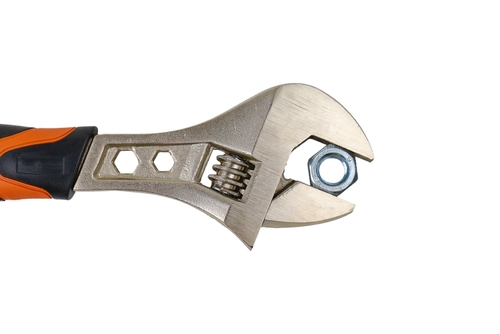
The adjustable wrench, also called a crescent wrench, has a movable jaw that can be widened or narrowed to fit different bolt and nut sizes. This makes it the most versatile of all wrench uses, a tool for home repairs.
Best for:
Plumbing fittings and tap repairs
Furniture bolts of varying sizes
Any job where you need one wrench to handle multiple fastener sizes
Adjustable wrench uses include almost every basic home repair scenario, which is why it is the first wrench every homeowner should own. The jaw is adjusted using a worm gear on the side, allowing it to fit nuts and bolts from 0mm to around 35mm, depending on the size of the wrench.
Vikram's adjustable wrench became his most-used home tool within weeks of buying it. He used it to fix his washing machine pipe, tighten the bolts on his new dining table, and secure the fitting on his geyser, all with the same wrench, just adjusted to different sizes.
Builder Insight: When using an adjustable wrench, always turn it so the pulling force is on the fixed jaw side, not the movable jaw. This prevents the jaw from slipping and rounding off the bolt or nut edges. |
Fast, precise, and perfect when you know exactly what size bolt you are working with.
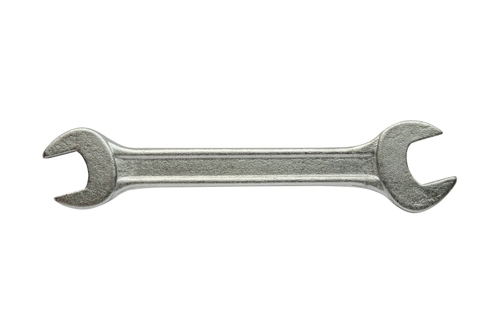
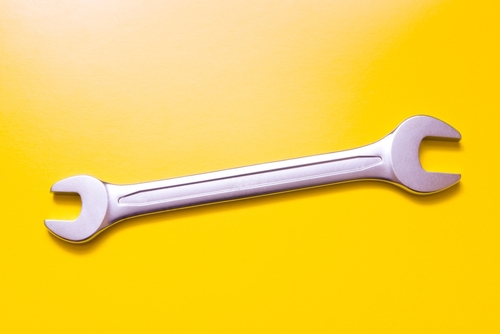
An open-end wrench has a U-shaped opening at one or both ends, designed to fit a specific bolt or nut size. Unlike the adjustable wrench, it is not versatile but it is faster and more precise for jobs where you are working with the same fastener size repeatedly.
Best for:
Engine and appliance maintenance
Jobs requiring speed with a known fastener size
Tight spaces where a box wrench cannot fit over the bolt head
Wrench sizes for open-end wrenches typically range from 6mm to 32mm in metric sizes.
More grip, more torque, the box-end wrench is what you reach for when the bolt is really stuck.
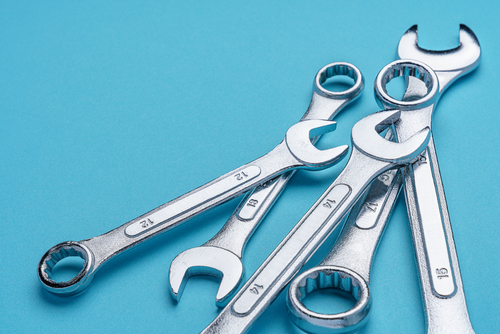
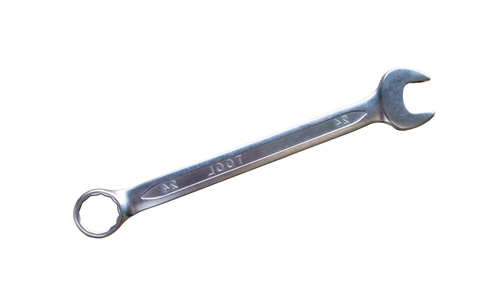
A box-end wrench has a closed ring at one or both ends that fits completely around the bolt head. This gives it more grip and allows more torque to be applied without slipping, making it better than an open-end wrench for stubborn or rusted fasteners.
Best for:
Heavily tightened or rusted bolts
Jobs where maximum grip and torque are needed
Automotive and appliance repairs
Many wrenches combine an open end on one side and a box end on the other, giving you the speed of the open-end and the grip of the box-end in one tool.
The fastest and most efficient wrench for repetitive tightening and loosening jobs.
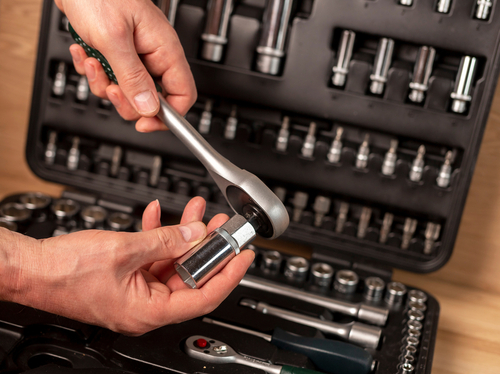
A socket wrench uses interchangeable socket heads that attach to a ratchet handle. The ratchet mechanism lets you tighten or loosen a fastener without removing and repositioning the wrench after each turn, making it significantly faster for jobs with many bolts.
Best for:
Furniture assembly with multiple bolts
Automotive maintenance
Any job requiring repeated tightening of the same size fastener
Socket wrench sets come with multiple socket sizes, making them one of the most complete wrench sizes solutions for a home toolkit.
Vikram bought a basic socket wrench set when he assembled his new wardrobe, a 20-piece flat-pack that came with 18 bolts. The ratchet mechanism meant he could tighten all 18 bolts in a fraction of the time it would have taken with a fixed wrench.
Built specifically for pipes, do not use it on bolts, and do not skip it when working on plumbing.
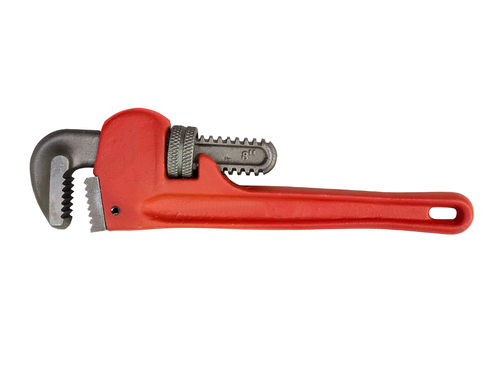
A pipe wrench is a heavy-duty adjustable wrench with serrated jaws designed to grip and turn cylindrical pipes and pipe fittings. The teeth bite into the pipe to prevent slipping, which is why it is perfect for plumbing but damaging to smooth bolt heads.
Best for:
Tightening and loosening threaded pipe joints
Installing or removing taps, showers, and pipe fittings
Any plumbing work involving round pipes
Wrench uses for the pipe wrench are almost exclusively plumbing-related. It is not a substitute for an adjustable wrench on regular nuts and bolts.
When Vikram's bathroom tap needed to be fully replaced, a plumber friend told him he needed a pipe wrench, not his regular adjustable wrench. The pipe wrench allowed him to grip and turn the tap base without damaging the chrome finish around it.
Small, simple, and surprisingly important, the Allen wrench is hiding in more of your furniture than you think.
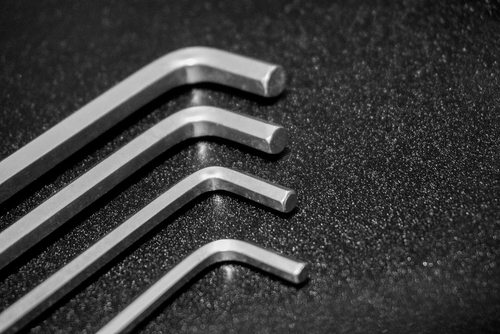
An Allen wrench, also called a hex key, is an L-shaped tool with a hexagonal cross-section. It is used specifically for hex socket screws, the kind found in flat-pack furniture, bicycle components, and many appliances.
Best for:
Flat-pack furniture assembly (IKEA-style bolts)
Bicycle handlebar and seat adjustments
Electronic equipment and appliance panels
Cabinet handles and door hardware with hex screws
Adjustable wrench uses and Allen wrench uses are completely different. Knowing which one you need before starting a job saves time and prevents damage.
Vikram found an Allen wrench already in his toolkit; it had come with his bed frame assembly kit. He later bought a full Allen wrench set in metric sizes when he got a bicycle, and found it useful for tightening several cabinet handles in his kitchen as well.
Using the wrong size wrench is not just inefficient; it can also permanently damage the bolt head.
Wrench sizes are one of the most confusing aspects of buying and using wrenches for first-time homeowners. Understanding how sizes work helps you buy the right tools and use them correctly.
Wrench sizes are measured by the width across the flats of the nut or bolt head the wrench is designed to fit. The most common wrench sizes for home use fall between 8mm and 24mm in the metric system.
Standard home-use wrench sizes include:
8mm and 10mm - Small bolts in appliances, bicycle components, and furniture
12mm and 13mm - Common in plumbing fittings and medium furniture bolts
14mm and 17mm - Frequently used in automotive and heavy appliance work
19mm and 22mm - Larger plumbing fittings and structural bolts
24mm and above - Heavy-duty plumbing, pipe fittings, and industrial use
India primarily uses the metric system for wrench sizes, measured in millimetres (mm). However, some imported tools, older appliances, and certain plumbing fittings use imperial sizes measured in inches and fractions of inches.
Metric sizes - 8mm, 10mm, 12mm, 13mm, 14mm, 17mm, 19mm, 22mm, 24mm
Imperial sizes - 5/16", 3/8", 7/16", 1/2", 9/16", 5/8", 3/4", 7/8", 1"
For most Indian homes, a metric wrench sizes set is sufficient. If you work on imported machinery or older plumbing systems, having a basic set of imperial sizes is useful.
Metric Size (mm) | Imperial Equivalent (inches) | Common Use |
8mm | 5/16" | Small appliance bolts, bicycle parts |
10mm | 3/8" | Furniture bolts, small fittings |
12mm | 7/16" | Medium furniture, plumbing connectors |
13mm | 1/2" | Common automotive and home use |
14mm | 9/16" | Appliance fittings, medium bolts |
17mm | 11/16" | Larger furniture, pipe fittings |
19mm | 3/4" | Plumbing joints, structural bolts |
22mm | 7/8" | Large pipe fittings |
24mm | 15/16" | Heavy plumbing, gas fittings |
Vikram laminated this chart and stuck it inside his toolkit box, saving him the effort of guessing wrench sizes every time he started a new repair job at home.
The right wrench is not the most expensive one; it is the one that fits the job.
Choosing the correct wrench from the many types and wrench sizes available comes down to four key questions, and check with the answers given below:
1. What type of fastener are you working with?
Different fasteners require different wrench types. Pipe wrenches are best for round plumbing pipes, Allen wrenches work for hex socket screws, while adjustable, open-end, and box-end wrenches are suitable for regular nuts and bolts. If you are tightening multiple bolts of the same size, a socket wrench makes the work faster and easier.
2. Do you know the exact size?
If you already know the bolt or nut size, an open-end or box-end wrench gives a better grip and a more precise fit. If the size is unknown, an adjustable wrench is more practical because its jaw can be adjusted for different fastener sizes.
3. How much space do you have around the fastener?
The surrounding space affects which wrench will work comfortably. Open spaces allow almost any wrench type, while tight or narrow areas are easier to handle with open-end or Allen wrenches. For blocked or deep spaces, a socket wrench with an extension is more convenient.
4. How much torque do you need?
Light tightening jobs can usually be handled with an adjustable or open-end wrench. For stubborn, rusted, or heavily tightened fasteners, a box-end wrench or socket wrench with a longer handle provides better grip and extra leverage.
Vikram now follows this four-question checklist every time he starts a home repair. It has helped him pick the right tool on the first try, instead of trying three different wrenches before finding the one that works.
Site Reality: The most common wrench uses mistake at home is using an adjustable wrench that is set too loose. A loose jaw slips on the bolt head and rounds off the edges, making the fastener extremely difficult to remove later. Always snug the jaw tightly before applying force.
A cheap wrench that slips or breaks mid-job is more dangerous than no wrench at all.
When buying wrenches for home use, look for these features regardless of type or wrench sizes:
Material: Chrome vanadium steel is the best material for home-use wrenches. It is strong, corrosion-resistant, and long-lasting. Avoid wrenches made from low-grade alloys, they bend or crack under pressure
Finish: A chrome-plated or nickel-plated finish prevents rust, especially important in humid Indian homes and bathrooms
Jaw quality: For adjustable wrenches, the jaw should move smoothly without play or wobble. A loose jaw is a sign of poor quality
Handle length: Longer handles provide more leverage and torque. For heavy-duty jobs, a longer handle reduces effort significantly
Grip: A non-slip, ergonomic handle reduces hand fatigue and prevents the wrench from slipping during use
Size markings: Good wrenches have clear size markings stamped on the head or handle: useful when you need to pick the right size quickly
Brand and warranty: For home use, mid-range brands with a warranty are a better investment than the cheapest option available
Vikram learned the hard way about quality; his first cheap adjustable wrench from a roadside stall had a loose jaw that slipped and scratched his geyser fitting. His second wrench, a branded chrome vanadium model, has lasted three years and still works like new.
Wrench uses at home are too frequent and too important to be handled with the wrong tool or no tool at all. Like Vikram, most homeowners discover the value of a good wrench set only after an expensive repair call or a botched DIY attempt. Start with a quality adjustable wrench, add an Allen wrench set, and expand your collection as your home repair needs grow. Understand your wrench sizes, match the tool to the job, and you will handle most common home repairs confidently, without waiting for a plumber or carpenter every time something needs tightening.
Building or renovating your home? Start with the right materials and the right knowledge. Explore UltraTech Products
The most common wrench uses at home include fixing leaking tap fittings, tightening plumbing connections under sinks and behind toilets, assembling furniture with hex bolts, installing geysers and washing machine pipes, and securing ceiling fan mounting bolts.
Standard wrench sizes for home use usually range from 8mm to 24mm. The most commonly used sizes are 10mm, 12mm, 13mm, 17mm, and 19mm for furniture, plumbing fittings, and appliance repairs.
Choose wrench sizes based on the width of the nut or bolt head. If the wrench is too loose, it can slip and damage the fastener. Adjustable wrenches are useful when the exact size is unknown.
An adjustable wrench is considered the best option for home use because it fits multiple wrench sizes and works for common plumbing, furniture, and appliance repairs.