


Share:
Home Building Guide
Our Products
Useful Tools
Home Building Guide
Products
Ultratech Building Products
Share:
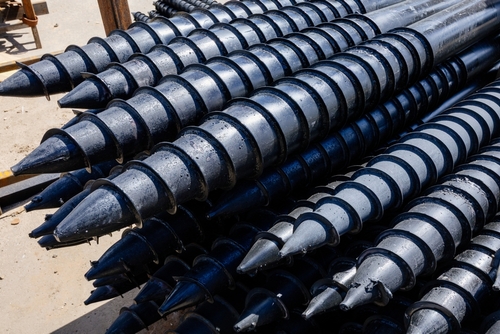
A helical pile is a long steel rod with spiral plates attached. It is drilled into the ground like a screw to create a strong base for a building.
Instead of digging big pits and pouring concrete, these piles go deep into the soil and support the structure from below. This makes them a smart solution for difficult soil conditions.
A helical pile may look like a simple steel rod, but it is made up of carefully designed parts. Each component has a specific role, and understanding them helps you see how the entire helical pile's foundation system works.
The steel shaft is the main body of the helical pile. It is the long rod that goes deep into the ground and carries the weight of the structure above. There are two common types of shafts.
Solid shaft – stronger, used for heavy loads
Hollow shaft – lighter, used for smaller structures
The choice depends on the load the pile needs to support and the soil type at the site.
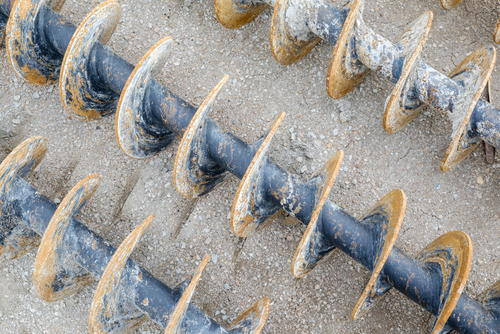
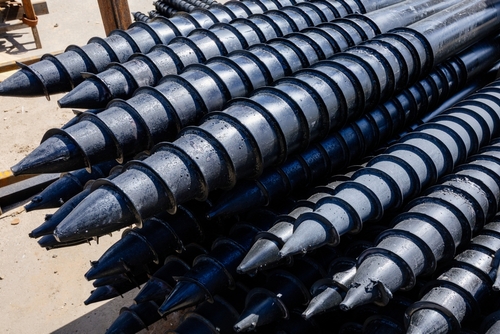
Helical plates are the round, spiral-shaped discs attached to the shaft. These plates are what make the pile work like a screw. As the pile rotates into the ground, these plates cut through the soil, helping the pile move downward smoothly.
At the same time, they grip the soil tightly and spread the load over a larger area. This prevents the pile from slipping or sinking and gives the foundation better stability, especially in soft or loose soil.
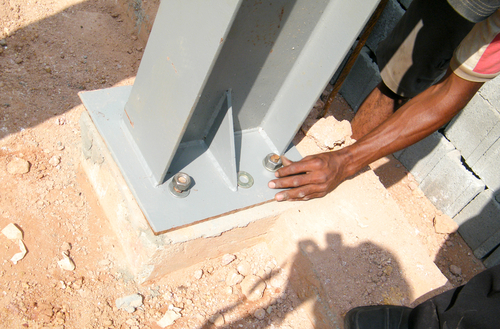
Connection brackets are placed at the top of the helical pile and act as a link between the pile and the building structure.
Once the pile is installed, these brackets are securely attached so that the weight of the house is transferred directly to the pile. A strong, properly fitted bracket ensures there is no movement, tilting, or uneven support. This small component plays a big role in keeping the entire structure stable.
Tip: Ensure proper rust protection. Use piles with good coating or treatment to prevent rust. This helps the foundation last longer, especially in moist or coastal areas. |
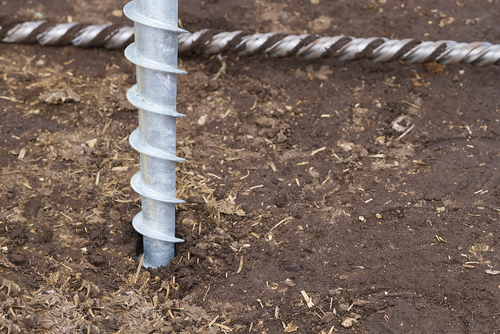
Helical piles work just like a screw going into wood. They are rotated into the soil using a machine. As they go deeper, the spiral plates cut through the soil and support the pile firmly.
Once they reach strong soil, they stop moving. This creates a strong base that can hold heavy loads without shifting.
Helical piles are used in many situations, especially where traditional foundations struggle. They are useful when the soil is not strong enough to support a building using traditional methods. Let’s understand where they are commonly used and why they make sense in those situations.
When you are building a new house on weak or loose soil, a regular foundation may not provide sufficient support. In such cases, helical piles go deep into the ground until they reach stronger soil layers.
If the soil is weak or soft, helical piles can provide a stable base without deep digging. They are very useful in areas with loose or sandy soil. This helps create a stable base right from the start. It also reduces the risk of future cracks, uneven floors, or sinking, which can occur when the foundation is weak.
Over time, some homes start to sink or develop cracks due to weak soil or poor foundation. This can be worrying, but helical piles can help fix the problem without breaking the entire structure.
They are installed under the existing foundation to lift and support the house. This stops further damage and helps bring the structure back to a stable position.
When you plan to extend your home or add another floor, the existing foundation may not be strong enough to handle the extra weight. This can create safety risks if not handled properly.
Helical piles can be added to strengthen the base. They transfer the extra load deeper into the ground, making sure your extension or new floor stays safe and stable.
Not every structure needs a heavy concrete foundation. For smaller or lighter structures such as decks, sheds, or temporary structures, helical piles are a quick and easy solution.
They can be installed fast with minimal digging, and they still provide enough support for these lightweight structures. This makes them both time-saving and cost-effective for smaller projects.
Tip: Think ahead before fixing the number of piles. If you may add another floor later, design the foundation now to handle the extra load and avoid rework. |
Installing helical piles for the house foundation is much faster and cleaner than traditional foundation methods. But even though it looks simple, each step is important to make sure the foundation is strong and long-lasting. Let’s break it down:
Before starting any work, the ground is carefully checked. This step helps understand whether the soil is soft, hard, wet, or mixed.
Based on this inspection, experts decide how deep the piles need to be, how many are required, and which type of pile will work best. This step is very important because a wrong assessment can lead to a weak foundation later.
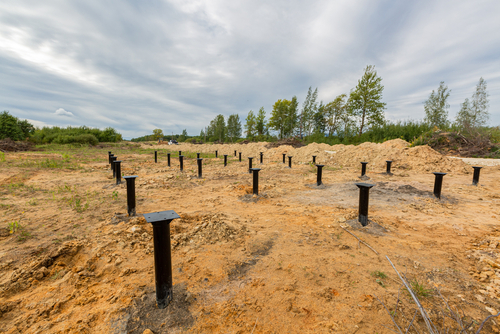
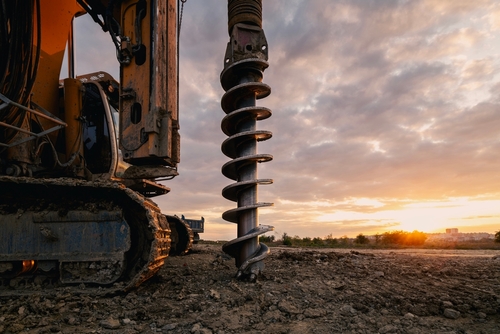
Once the planning is done, a special hydraulic machine is brought to the site. This machine rotates the helical pile into the ground, just like a screw going into wood.
The process is controlled and steady, so the pile goes in straight and reaches the correct depth. Since there is no heavy digging, the surrounding area stays clean and undisturbed.
As the pile goes deeper, the machine measures resistance, also called torque. This tells how strong the soil is at that level.
When the resistance becomes high enough, it means the pile has reached strong soil that can support the building. This step ensures that the foundation will be stable and safe over time.
Once the pile reaches the required depth, the top section is prepared for connection to the structure. Strong brackets are fixed on top of the pile.
These brackets help transfer the house's weight directly to the pile. Proper fixing is important so that there is no movement or shifting once construction begins.
Tip: Typical installation time for small-scale projects is 2 to 5 days, and larger projects often require a week or more for installation
Helical piles are becoming popular because they offer many benefits.
1. Fast Installation: Unlike concrete foundations, there is no waiting period. Once installed, you can start building immediately.
2. Works in Weak Soil: These piles are ideal for soft soil, wet land, and clay areas. They go deep until they find strong soil.
3. Minimal Excavation: No need to dig large pits. This reduces mess, labour, and time.
4. Can Be Used in Tight Spaces: Helical piles are great for small plots or crowded areas. Machines can work even in a limited space.
5. All-Weather Installation: Rain or sun, installation can continue. This helps avoid construction delays.
Like any method, helical piles also have some drawbacks.
1. Not Ideal for Rocky Soil: If the ground is too rocky, it becomes difficult to rotate the pile. This can stop the installation process.
2. Higher Material Cost: Steel piles can be more expensive than traditional concrete. However, faster work can balance the cost.
3. Requires Machinery & Expertise: Special machines and trained workers are needed. This may not be available in every area.
To make your decision easier, let’s compare both options side by side and see how they differ in real construction situations:
Feature | Helical Piles Foundation | Traditional Foundation |
Installation Time | Very fast | Takes days/weeks |
Soil Suitability | Works in weak soil | Needs strong soil |
Excavation | Minimal | Heavy digging required |
Weather Impact | Can work in all weather | Delays during rain |
Cost | Higher material cost | Lower material cost |
Space Requirement | Works in tight spaces | Needs more space |
Helical piles are a smart choice when traditional methods become difficult. You should consider them when:
Soil is weak or loose
The area is waterlogged
You need fast construction
Space is limited
Repairing an old foundation
There are certain scenarios in which other foundation methods may work better. Avoid using helical piles when:
Soil is very rocky
Heavy machinery cannot reach the site
The budget is very tight
Let’s talk about the cost in simple terms.
The price of a helical pile in India can vary widely, but on average it ranges from ₹3,000 to ₹10,000 per pile. This is only a rough estimate, and the final cost may change depending on your site conditions and building needs.
Several things can increase or decrease the total cost of a helical pile foundation:
Soil condition – If the soil is very soft or loose, the piles need to go deeper to reach stronger ground. This increases the material and installation cost.
Depth of installation – The deeper the pile goes, the more steel and effort are required, which raises the cost.
Load requirement – Heavier houses or buildings require stronger, and sometimes larger, piles, which cost more.
Number of piles needed – Bigger structures need more piles to distribute weight safely, increasing total cost.
Site accessibility – If machines find it difficult to reach the site (e.g., tight or crowded areas), installation may take longer and require more effort.
Understanding these factors helps you plan your budget better and avoid surprises during construction.
Helical piles for house foundations are a modern and smart solution, especially when soil conditions are not ideal. They are fast, efficient, and reduce construction hassle.
If you are building a house or renovating an old one, understanding helical pile foundations can help you make better decisions. A strong foundation means a safe and long-lasting home for your family.
Helical piles are made of strong steel. This steel is designed to carry heavy loads and last a long time underground.
A well-installed helical pile can last 50 to 100 years. Proper protection from rust increases its life.
The depth of a helical pile depends on soil strength. Usually, it goes 10 to 30 feet deep before reaching strong soil.
Each helical pile can hold a large amount of weight. The exact capacity depends on its size and soil condition.
The size of helical piles depends on:
An expert can help choose the right size.