


Share:
Home Building Guide
Our Products
Useful Tools
Home Building Guide
Products
Ultratech Building Products
Share:
Before applying this design to your home, it is important to understand why these houses were built this way. The climate and lifestyle shaped every detail.
Chettinad is a region in southern Tamil Nadu. The weather here is hot most of the year. Long ago, people designed houses that stayed cool without the help of machines like air conditioners.
So they created homes with:
Big open courtyards
Thick walls
High ceilings
Long corridors
Many windows for air flow
Families were also very large in those days. One house could have grandparents, parents, children, and relatives living together. That is why traditional Chettinad house plans were designed to be very spacious.
Plan for Air Flow: Add windows on opposite walls so fresh air can travel across rooms. |
Tiny details create the real charm of Chettinad-style home design. These homes are famous for certain special elements.
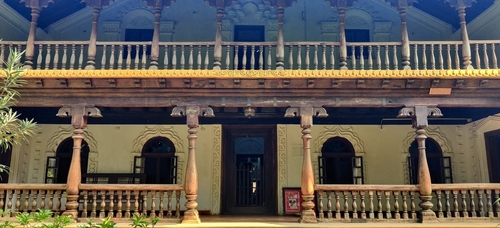
The thinnai is a raised seating space at the front of the house.
People use it to:
Sit and relax in the evening
Talk with neighbours
Welcome visitors
It also keeps the house slightly above road level.
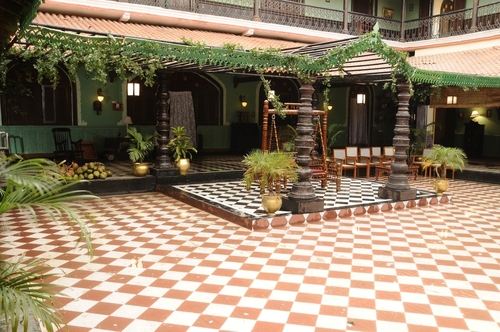
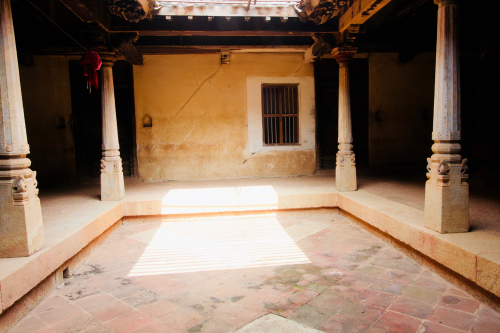
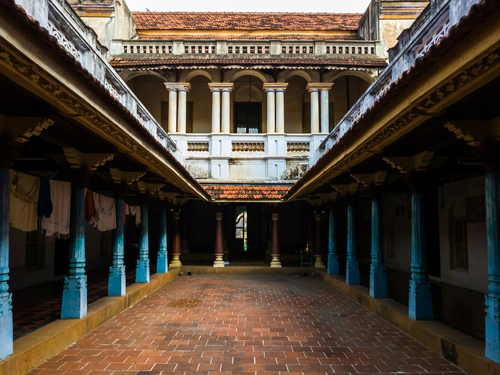
The mutram is an open courtyard in the centre of the house. Families often gather here for meals or celebrations.
It allows:
Sunlight to enter the home
Fresh air to circulate
Rainwater to fall naturally into the courtyard
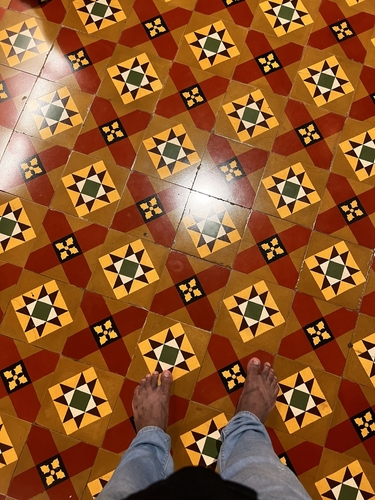
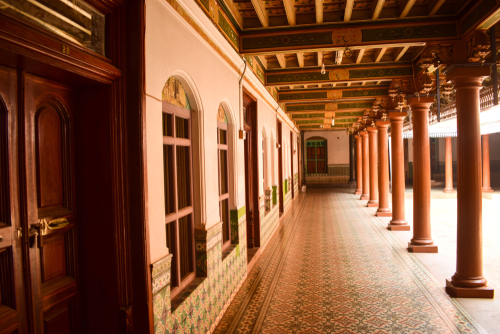
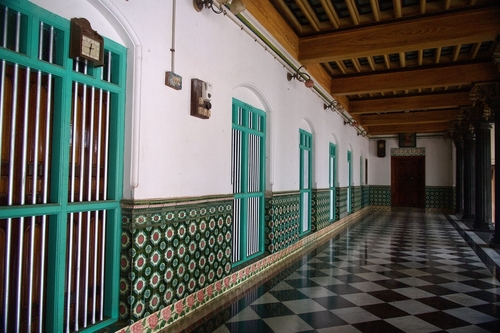
Chettinad homes are famous for colourful Athangudi tiles. They add beauty and tradition to the home.
These tiles:
Are handmade
Have bright patterns
Keep floors cool
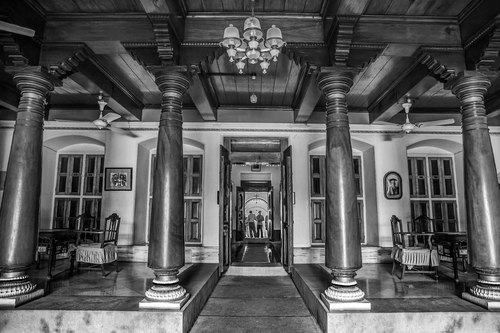
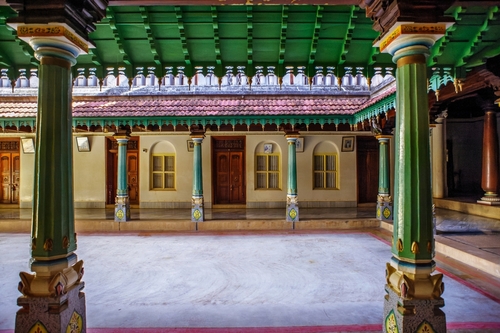
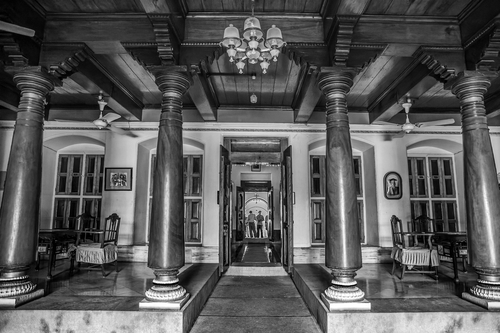
Strong wooden pillars support the roof and create long corridors. They also give the house a royal appearance. These pillars also help divide large spaces into smaller sitting areas without blocking airflow.
Traditional Chettinad homes have sloping roofs that help rainwater flow away easily. This design also protects the walls from heavy rain and helps keep the inside of the house cooler.
Tip: Add open spaces or skylights to let sunlight into the house. This can reduce electricity use during the day. |
A good Chettinad-style house plan is not random. Every room has a purpose and a fixed place in the layout. Here is how most traditional Chettinad house plans are arranged.
The house starts with a large doorway leading to the thinnai. This entrance area is designed to feel welcoming and spacious. Guests can sit here comfortably before entering the main house. It also acts as a small resting place where family members can relax during the evening.
After entering, you usually find a big hall where guests are welcomed. This space is often used for family gatherings, celebrations, and important discussions. Because the hall is large, it allows many people to sit together comfortably during festivals or family events.
The courtyard sits in the middle of the house. Rooms are built around it so that every part of the home receives fresh air and sunlight. This open space also helps the house stay cool during hot weather. Families often spend time here during the day, and children can safely play in this open area.
Bedrooms are placed along the sides of the courtyard to keep them cool and quiet. This placement also gives each room better ventilation. Since the courtyard allows air to circulate, bedrooms remain comfortable even during warm days.
Dining spaces are usually near the kitchen for easy serving. This area is large enough for the whole family to sit and eat together. Eating meals together was considered an important part of daily family life.
Traditional kitchens are large because cooking for big families was common. These kitchens also have good ventilation, so smoke and heat can move out easily. Storage spaces for grains, spices, and cooking tools are usually built nearby.
The backyard is an important part of traditional Chettinad homes. It may include spaces for washing clothes, drying food items, or storing household items. Some homes also have small gardens where plants, vegetables, or trees are grown.
Choosing the wrong materials can affect the comfort and strength of your home, so this step is very important. Traditional Chettinad homes used strong natural materials.
Common materials include:
Brick walls
Lime plaster
Wooden beams
Clay roof tiles
Handmade floor tiles
These materials helped keep homes cool and strong. Today, modern construction materials can also be used while keeping the same design style.
Choose Strong Foundations: Always invest in good foundation materials before focusing on decoration.
The outside of the house is only half the beauty. The interiors are what give Chettinad homes their rich and traditional look. Chettinad-style interiors are known for colour, craftsmanship, and cultural designs.
Common colours include:
Deep red
Mustard yellow
Brown
Dark wood shades
These colours make the house feel warm and traditional.
Furniture is usually made from strong wood and often has carved designs.
Examples include:
Wooden swings
Large dining tables
Carved chairs
Wooden cupboards
You may see traditional patterns like:
Floral designs
Temple-inspired carvings
Geometric shapes on floors and ceilings
Many people love the traditional look but want modern comfort. The good news is that both can work together.
Today, builders often mix traditional Chettinad house plans with modern materials. This way, you can enjoy the beauty of Chettinad-style home design while also getting modern durability.
Traditional Feature | Modern Adaptation |
Clay roof tiles | Modern roofing systems |
Handmade Athangudi tiles | Durable patterned floor tiles |
Lime plaster | Modern wall finishes |
Wooden beams | Engineered wood or reinforced support |
Open courtyards | Skylight courtyards |
Blend Old and New: Choose the traditional elements you love and combine them with modern comfort.
A Chettinad-style house design is a wonderful example of traditional Indian architecture. These homes are spacious, airy, and built for family living.
Even today, many people choose Chettinad-style interiors and traditional Chettinad house plans because they offer beauty, comfort, and cultural richness. When planned carefully, this design style can create a home that is both timeless and practical.
The best interior design depends on your lifestyle and taste. Some people prefer modern minimal styles, while others like traditional designs. Chettinad-style interiors are a great choice if you enjoy warm colours, wooden furniture, and cultural patterns.
The cost depends on factors like land size, materials, labour, and design details. Traditional elements such as handmade tiles, carved wood, and large courtyards can increase the cost. A simple Chettinad-style house plan may cost less, while grand designs can be more expensive.
Chettinad is famous for its rich culture, grand mansions, traditional cuisine, and handcrafted materials like Athangudi tiles. The architecture is designed to handle hot weather while providing comfortable living spaces.
Normal tiles are usually factory-made. Athangudi tiles are handmade using traditional methods. They have colourful patterns and are known for their smooth, glossy finish.
Chettinad style is a traditional architectural and interior design style from southern India. It is known for spacious homes, central courtyards, decorative tiles, carved wood furniture, and strong pillars that create a grand yet comfortable living space.