


Share:
Home Building Guide
Our Products
Useful Tools
Home Building Guide
Products
Ultratech Building Products
Share:
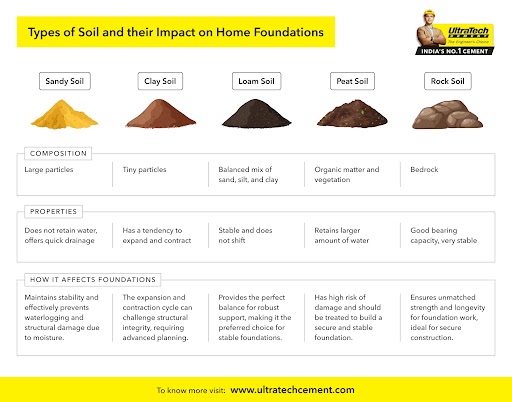
When we build a house, we often focus on walls, design, and paint. But the real strength of a building comes from below the ground. This is where deep foundations play an important role in construction.
A strong foundation ensures the building does not sink, crack, or become unstable over time. In many cases, especially where soil is weak, engineers use deep foundations in construction to transfer the load safely to stronger soil layers or rock below.
When Ramesh planned his dream home, he assumed normal foundation work would be enough. But after soil testing, his engineer explained that the ground was soft, and a stronger system of deep foundation was needed. That’s when he first understood how important foundations are for long-term safety.
A deep foundation is a type of foundation that goes deep into the ground to transfer the load of a building to stronger soil or rock layers. Unlike shallow foundations, which work near the surface, deep foundations go much deeper to ensure stability.
This type of foundation is used when the topsoil is weak, loose, or unable to carry heavy loads. It helps distribute the building weight safely into deeper, stronger layers of earth. For example, tall buildings, bridges, and structures built on soft soil always require deep foundation systems.
When Ramesh saw the soil report of his plot, he learned that the upper soil layer was not strong enough. So, his engineer suggested a deep foundation in construction to make sure his house would remain stable for decades.
Tip: Always conduct soil testing before construction because the foundation type depends entirely on soil strength. |
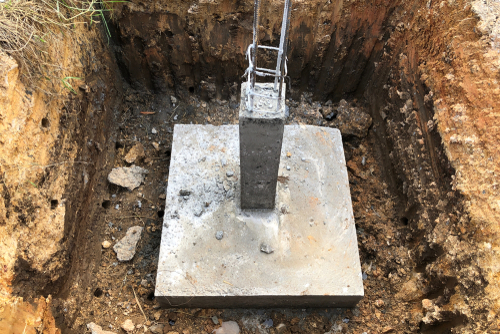
Understanding the difference between deep foundations and shallow foundations is important before starting any construction. Both serve the same purpose of supporting a building, but they work in very different ways based on soil strength and load conditions.
Feature | Deep Foundation | Shallow Foundation |
Depth | Goes deep into the ground | Near surface level |
Soil Type | Used for weak soil | Used for strong soil |
Load Capacity | High load-bearing capacity | Suitable for light structures |
Cost | Higher cost | Lower cost |
Construction Time | Longer | Faster |
Examples | Piles, caissons | Isolated footing, strip footing |
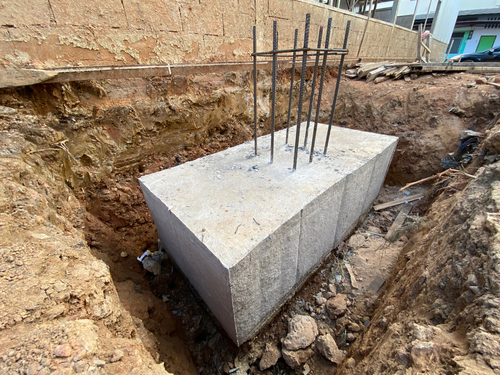
Shallow foundations are enough for small houses in strong soil areas. But deep foundations are required when soil cannot support building weight near the surface.
Tip: Choose foundation type based on soil strength, not budget alone.
A deep foundation is needed when the surface soil cannot safely support the structure. It is also used when loads are very heavy or when the structure needs extra stability.
You need deep foundations when:
1. Soil is weak or loose:
When the upper soil cannot support the building load properly, deep foundations are needed to transfer the weight to stronger layers below. This helps prevent sinking or structural damage.
2. Groundwater level is high:
If water is present close to the surface, shallow foundations may become unstable or weaken over time. Deep foundations help move past this wet zone and reach firm ground.
3. The building is multi-storey or heavy:
Taller buildings or heavy structures create more load on the ground. Deep foundations safely distribute this load to deeper, stronger soil or rock.
4. Risk of settlement is high:
When uneven sinking of the structure is expected, deep foundations reduce this risk by anchoring the building firmly below weak soil layers.
5. The site is near water bodies or soft land:
Areas near rivers, lakes, or marshy soil lack stability at the surface. Deep foundations ensure the structure remains stable by reaching solid ground underneath.
Ramesh’s plot was near a low-lying area, and his engineer advised using a deep foundation in construction to avoid future sinking or cracks.
There are different types of deep foundations, and each is used based on soil and load conditions.
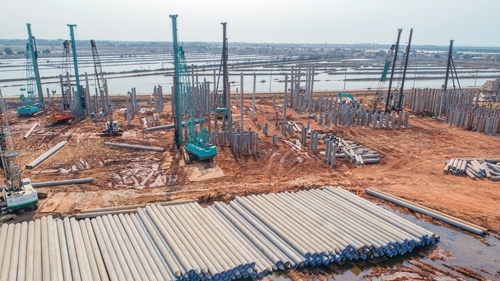
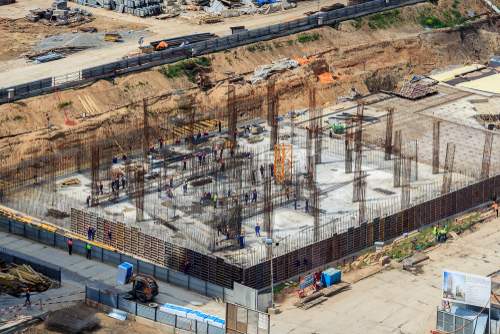
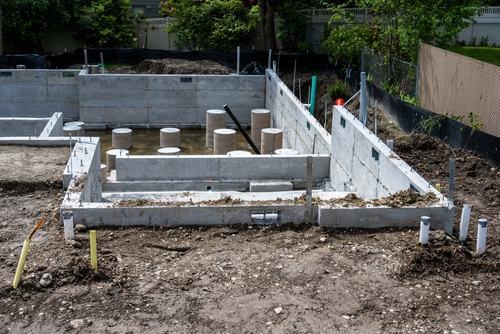
Pile foundations are long columns made of concrete, steel, or timber that are driven or drilled into the ground. They transfer building load to deeper, stronger soil layers.
Ramesh’s house used bored piles because the soil was soft and needed strong support below.
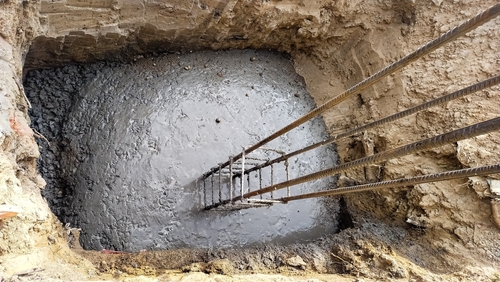
These are large-diameter holes drilled into the ground and filled with reinforced concrete. They provide strong vertical support for heavy structures.
Caisson foundations are large box-like structures sunk into the ground, commonly used in bridges and waterfront structures. They are very strong and suitable for underwater or soft soil areas.
These are reinforced walls built below ground level, often used in basements and high-rise buildings. They help provide structural stability.
Tip: Use drilled shafts when high load capacity and stability are required.
Deep foundations work by moving the entire weight of a building away from weak surface soil and transferring it to much stronger soil or rock layers found deep underground. This ensures the structure remains stable even when the topsoil cannot support heavy loads.
Ramesh was surprised when his engineer explained this concept. He always assumed the foundation was just a base under the house, but later he learned that most of his home’s weight would actually be supported by deep underground columns, not the surface soil he could see.
Tip: Think of a deep foundation like the roots of a tree; the deeper they go, the stronger the structure.
Deep foundations provide strong and long-lasting support for buildings, especially in weak or unstable soil conditions. They help ensure safety, stability, and durability by transferring loads deep into the ground where the soil is stronger.
1. High Load-Bearing Capacity: Deep foundations can carry very heavy building loads by safely transferring weight to stronger soil or rock layers deep underground.
2. Stability in Weak Soil Conditions: They provide strong stability even when the topsoil is loose, soft, or uneven.
3. Resistance to Uneven Settlement: Deep foundations help prevent uneven sinking of different parts of a building. This reduces the risk of cracks in walls, floors, and structural joints.
4. Better Performance Against Lateral Forces: They offer strong resistance against sideways forces like wind pressure and earthquakes.
5. Suitable for Challenging Sites: Deep foundations are ideal for difficult construction sites such as water-logged areas, sloped land, or weak soil zones.
Tip: In earthquake-prone or high-wind regions, deep foundations significantly improve building safety.
Deep foundations provide strong structural support, but they also come with certain limitations that homeowners and builders should understand before starting construction. These factors mainly affect cost, time, and construction complexity.
1. Higher Construction Cost: Deep foundations require more materials, deeper excavation, and specialised machinery, which increases overall construction cost.
2. Requires Skilled Labour and Machinery: Installation of deep foundations needs trained workers and heavy machinery like pile drivers or drilling rigs.
3. Longer Construction Time: Deep foundation work takes more time because of soil testing, drilling, reinforcement, and curing processes.
Tip: Always plan your foundation budget early because deep foundation costs can significantly impact the total construction estimate.
The cost of deep foundations in India varies depending on design type, soil condition, and construction depth. Since these foundations require specialised work, they are generally more expensive than shallow foundations.
Different types of deep foundations have different price ranges based on complexity and usage.
Pile foundation: Moderate to high cost depending on depth and material
Caisson foundation: High cost due to large-scale construction
Diaphragm wall: Very high cost as it involves advanced engineering
Each type is selected based on structural need, not just budget.
Several elements influence the final cost of deep foundation work:
Depth of foundation required
Type and condition of soil
Construction materials used
Machinery and labour required
These factors can significantly change the total project budget.
Tip: Never reduce foundation quality to save money, as it supports the entire structure for decades.
Mistakes during foundation planning can lead to serious structural issues later. Most problems occur due to poor planning or ignoring technical advice.
Skipping soil testing is one of the biggest mistakes in construction. Without knowing soil strength, the wrong foundation type may be selected.
Ramesh was glad he did soil testing early, as it helped avoid choosing an unsuitable shallow foundation.
Selecting a foundation without expert guidance can lead to cracks, settlement, or structural failure.
Ramesh initially thought a basic foundation would work, but expert advice helped him choose the correct deep foundation system.
Many homeowners forget to consider future expansion like extra floors or heavy additions. This leads to overloaded foundations later.
Ramesh planned only for his current house, but later realised future expansion should have been considered from the start.
Tip: Always design foundations with future load requirements in mind to avoid costly modifications later. |
A strong building always starts below the ground. Deep foundations are used when surface soil cannot safely support a structure, making them a key part of safe construction in many locations.
In Ramesh’s case, choosing the right foundation type early saved him from future risks like cracks, uneven settlement, and repair costs. Although the initial cost was higher, the long-term stability made it worth it.
The main types of deep foundations include pile foundations, drilled shafts (bored piles), caisson or well foundations, and diaphragm walls. Each type is used depending on soil condition and building load requirements. These systems help transfer the structure’s weight to deeper, stronger soil layers.
Deep foundations are used when the surface soil is weak and cannot support the building load safely. They are also required for multi-storey buildings, bridges, or structures built on soft or water-logged land.
Yes, deep foundations are generally more expensive than shallow foundations because they require specialised equipment, skilled labour, and more time. However, they provide long-term safety and reduce the risk of structural damage.
The depth of a deep foundation depends on soil conditions and building load. It can go several meters deep until it reaches a strong, stable soil layer or rock bed that can safely support the structure.