


Share:
Home Building Guide
Our Products
Useful Tools
Home Building Guide
Products
Ultratech Building Products
Share:
Building materials used in construction include steel, cement, concrete, wood, bricks, and more.
Proper selection of construction and building materials ensures strength, durability, and safety.
Some materials are ideal for structure, others for finishing or binding.
Knowing the right materials for your home construction saves cost and improves longevity.
A complete building materials list helps plan, estimate, and execute construction efficiently.
Construction materials are substances used to build the structural and non-structural components of a building. The materials used in construction form the backbone of construction, from foundations and walls to roofing and finishing.
Materials used to build a house range from natural materials such as wood, stone, and brick to manufactured products such as cement, steel, and concrete. Selecting the right materials for home construction ensures durability, safety, and cost efficiency.
Key properties to consider while selecting construction and building materials include:
1. Strength: Ability to bear loads without failing.
2. Durability: Resistance to weather, corrosion, and wear
3. Workability: Ease of handling, shaping, and installing
4. Fire Resistance: Safety during high-temperature exposure
5. Cost: Affordability while maintaining quality
6. Sustainability: Eco-friendly and recyclable materials
Here’s a detailed building materials list covering the most important types of building materials and their uses:
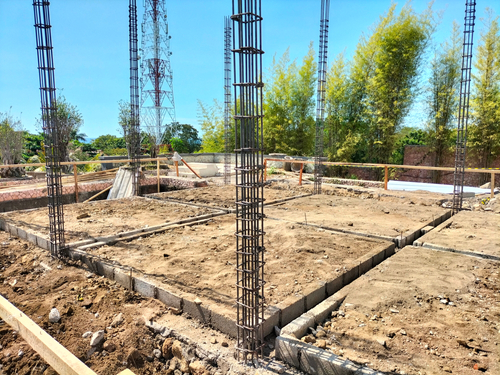
Steel is widely used for reinforcement and structural frames due to its high strength and ductility (ability to deform without sudden fracture). Common grades used in India include Fe415 and Fe500 TMT bars. Steel is susceptible to corrosion and must be protected with adequate concrete cover or coatings in exposed environments.
Cement is a key component among house building materials, acting as a hydraulic binder used to make concrete and mortar. It provides strength and durability to structures. Its quality and grade play a crucial role in determining the overall stability and lifespan of constructions. Common types include Ordinary Portland Cement (OPC) and Portland Pozzolana Cement (PPC); Portland Composite cement(PCC) gains strength by reacting chemically with water (hydration).
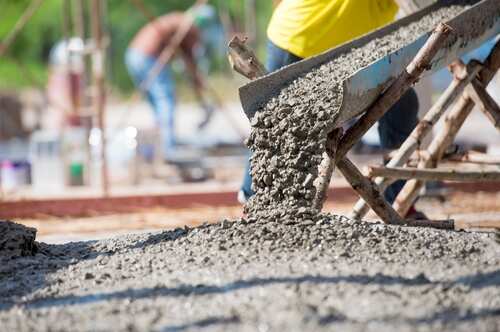
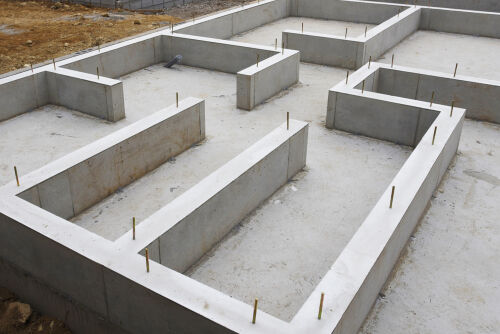
Concrete, made from water, sand, and coarse aggregates, is the primary material for foundations, slabs, and columns. It offers high compressive strength and versatility, making it essential for both structural and infrastructural projects. Concrete is strong in compression but weak in tension; steel reinforcement is added to handle tensile forces. Mix grades (e.g., M20, M25) indicate minimum compressive strength in N/mm².
Ready mix concrete is a modern solution in construction and building materials, delivered in transit mixers from a central batching plant to ensure uniform quality. It saves time, reduces on-site labour, minimises wastage, and improves efficiency with controlled mixing conditions. RMC must be placed and compacted within 90 minutes of batching (as per IS 4926) to prevent slump loss and premature setting.
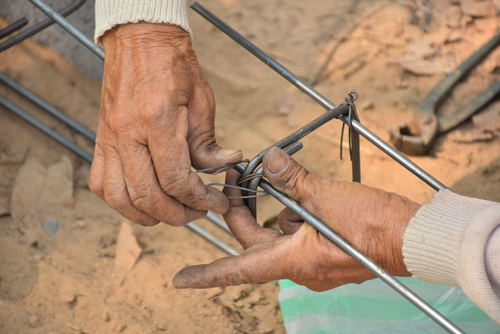
Binding wire is an important part of the list of materials used in building construction, used to tie rebars, reinforcing steel, and structural components securely.
1. Constructional Binding Wire (Straightened Cut Wire): Used for general rebar tying and reinforcement work.
2. Black Annealed Binding Wire: Flexible wire for tying and structural connections.
3. Galvanized Iron Binding Wire: Resistant to rust; suitable for outdoor construction.
4. Small Coil Rebar Wire: Used in detailed reinforcement works.
5. Tie Loop Tie Wire: For looped rebar and grid structures.
6. Binding Wire for Packing: Used to secure materials and bundles during transport.
7. U Type Binding Wire: For specific structural applications.
8. Galvanized Wire: Durable, rust-resistant wire for exterior use.
9. Stainless Steel Wire: Highly corrosion-resistant for exposed areas.
10. Brass Wire: Used in decorative and specialized constructions.
11. Aluminum Wire: Lightweight wire for small-scale reinforcement and packing.
12. PVC Coated Binding Wire: Protective coating prevents rust and increases longevity.
Wood is used for formwork, scaffolding, doors, windows, and finishing. Hardwoods and treated wood provide durability and aesthetics. It is also preferred for its versatility and ease of shaping, making it ideal for structural and decorative applications.
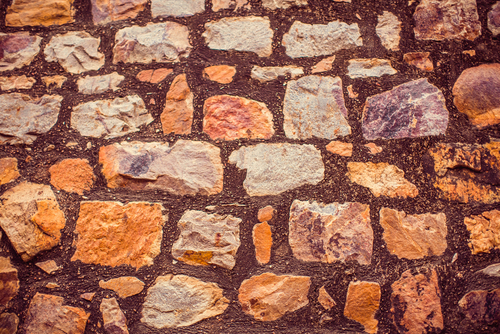
Stone is used for foundations, walls, flooring, and decorative purposes. Durable and fire-resistant, stones have been used in construction for centuries. Its natural strength and weather resistance make it suitable for long-lasting and low-maintenance structures.
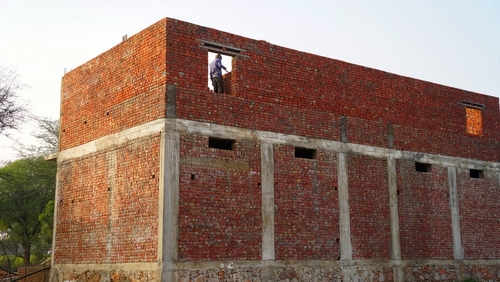
Bricks are standard materials for walls, partitions, and pavements. They offer thermal insulation and structural strength. Their uniform size and cost-effectiveness make them one of the most widely used construction materials.
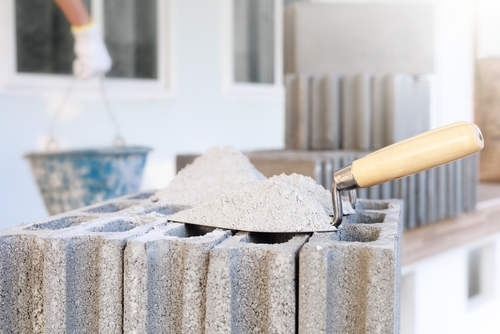
Concrete and fly ash blocks are used for faster construction and provide better insulation compared to bricks. They also reduce overall construction load and improve efficiency due to their larger size and reduced number of joints.
Note: Standard concrete and fly ash blocks are not lightweight; Autoclaved Aerated Concrete (AAC) blocks are the lightweight variant, offering significantly lower density (~550–650 kg/m³) and better thermal insulation.
Aggregates, including sand, gravel, and crushed stone, are essential for concrete and mortar. They determine strength, texture, and durability. The quality and grading of aggregates directly impact the performance and longevity of the structure. Aggregates are classified as fine (particle size up to 4.75 mm, e.g., river sand or M-sand) and coarse (typically 10 mm or 20 mm nominal size). Both must conform to IS 383 for use in structural concrete.
Choosing the right building materials used in construction is key to a safe, strong, and long-lasting home. From steel and cement to bricks and aggregates, each material has a special purpose and benefits.
By selecting quality materials used to build a house and using them correctly, you can ensure your walls, foundations, and slabs perform reliably for years. Consult your builder to pick the best materials for your project and build a home that stands the test of time.
Concrete is the most commonly used material due to its strength, versatility, and wide applications.
Steel and reinforced concrete are among the most durable construction materials.
Concrete blocks and bricks reinforced with steel provide strong, long-lasting walls.
Concrete with proper reinforcement using steel is considered the most reliable foundation material.
The M20 concrete grade provides adequate strength, durability and economy, making it suitable for RCC in residential buildings.