


Share:
Home Building Guide
Our Products
Useful Tools
Home Building Guide
Products
Ultratech Building Products
Share:
Buying a plot isn’t just about what looks good today. It’s about whether the land can support your house tomorrow.
Let’s take the example of Ravi from Nagpur. He’s in his early 30s, works in a small manufacturing unit, and lives with his parents, wife, and young daughter. For the past few years, he has been saving to buy land for building a house that suits his family’s future needs.
Like many other families, Ravi is looking for something reliable; he just wants a safe and well-connected area with clean water, a steady electricity supply, and access to schools and hospitals nearby.
Here’s how Ravi, and you can make the right choice when purchasing land to build a house.
Location is the first and most important factor when purchasing land. Look for plots near main roads, schools, and hospitals. A land that is too far away might come at a lower price, but you may spend more on daily travel and basic facilities later.
Before finalising, visit the area at different times of the day to check noise levels, lighting, and bus or auto connectivity.
Tip: Talk to local residents, they often give the most honest feedback about water supply, power cuts, and local safety.
When you’re purchasing land to build a house, the shape of the plot matters more than people think. A regular, rectangular plot is easier to design and use efficiently. Odd-shaped plots can create difficulties in layout planning and increase construction costs.
Also, plan the size of your land based on how big your house will be and whether you may want a small garden or open space for ventilation.
Set a clear budget before you start searching. While land cost is the main part, remember to include registration fees, legal costs, and soil or survey tests.
Tip: Keep a 10-15% buffer in your budget for unexpected expenses such as extra boundary wall work or land levelling.
Also Read: Home Construction Budget Planning
Once you shortlist a few options, it’s time to visit the site. Physical verification helps you confirm what’s really there and not just what’s promised on paper.
Many lands in tier 2 and 3 cities were originally agricultural lands. Before purchasing land to build a house, ensure it’s legally converted to residential use. Check for approvals from the local development authority and municipality.
If the land is under “non-conversion” or part of government acquisition, it can cause problems later.
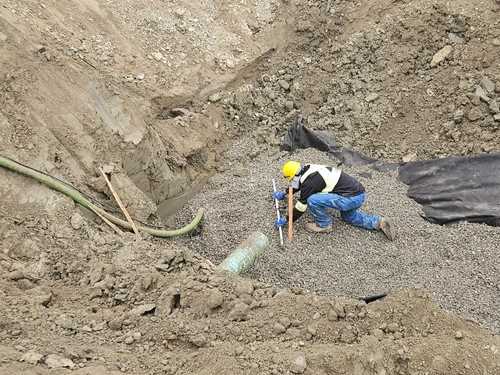
Good soil is important for the stability of your future house; a professional soil exploration can help you assess soil quality. Avoid land with too much clay or loose sand, as it may not support heavy structures.
Also, look at the land’s level compared to the surrounding area. A low-lying plot can gather rainwater easily, while land that’s slightly elevated ensures better drainage.
Tip: Check for visible signs of waterlogging after rain; patches of water may mean poor drainage capacity.
Proper roads, streetlights, and access to clean water and electricity supply are must-haves. You can ask for the local development plan to confirm if major pipelines, schools, or market roads are coming up soon.
Land that’s connected to nearby highways or railway stations will also grow in value over time.
Before any payment, you must carefully check all legal documents related to the plot. Ravi nearly faced issues because the seller didn’t have complete papers. Avoid such risks by ensuring all paperwork is in place.
Always deal directly with the actual owner. Ask for government-issued ID proofs and cross-check them with ownership documents. It’s best to match the seller’s name on electricity and tax bills, too.
An encumbrance means that the land may be under a loan or dispute. Visit the registrar’s office to get an “Encumbrance Certificate” (EC). This certificate will show whether the property has any unpaid dues or court cases.
The Mother Deed tells you the full history of ownership. It keeps a record of all previous owners of the land. A missing or unclear Mother Deed can mean future legal problems.
Tip: Never buy land based only on a photocopy. Always ask to view original papers before signing anything. |
If someone else is selling land on behalf of the owner, ask for the Power of Attorney (POA) document. The POA should be legally registered and current. Avoid buying land where the POA seems suspicious.
This is the main document that proves the ownership transfer. Ensure the Sales Deed is signed and registered at the local sub-registrar's office.
Finally, talk to local people and check with the municipal office to confirm that the land isn’t part of an ongoing legal or family dispute. These checks may save years of trouble later.
While not a legal rule, many people in India prefer Vastu-compliant land when purchasing land to build a house. A north or east-facing plot is usually considered best as it allows good sunlight and proper ventilation.
The shape of the land also matters; square or rectangular plots are seen as balanced and easier for construction. It’s also good if the land is slightly higher in the south or west direction for better water flow and drainage.
Even if you don’t strictly follow Vastu, checking these small details can help make your home brighter, cooler, and more comfortable.
Also Read: Tips to select plot as per vastu
Tip: Even a small change, like adjusting the orientation of your house during construction, can make a major difference in airflow and lighting. |
Purchasing the right land takes time, patience, and careful planning. It’s important to check every detail, from the quality of soil and location to legal documents and approvals. Always complete both physical and document verification before making any payment.
Just like Ravi, who took the time to understand every detail before finalising his plot, you too can make a smart and confident choice for your future home.
Also read: Vastu Tips for while building your home
Location, land conversion status, soil quality, and ownership documents are the main factors.
Choose a properly approved plot with good access roads, water supply, and a clean legal record.
Residential land with firm soil and proper local authority approval is best for building a safe and strong home.
Many prefer north- or east-facing plots following Vastu principles. However, focus on natural light and ventilation.
This depends on your family size and budget, but ideally, choose a rectangular plot where you can build efficiently without wasting space.