Get In Touch

Get Answer To Your Queries

Select a valid category

Enter a valid sub category

acceptence

Circular Economy

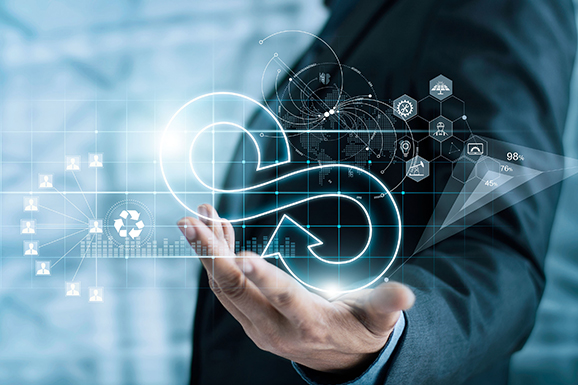
Circular economy principles underpin our approach to sustainable manufacturing. Circular economy is a concept that goes beyond just recycling. By nature, the cement industry is at the forefront of the circular economy, driven by the systematic integration of waste and alternative materials utilisation within its operations. It is a restorative and regenerative process where resources are used in the first place and they are upcycled or down cycled until the complete value is derived from them.


logo


At UltraTech, circularity is embedded into the way we design, manufacture and deliver our products. By transforming industrial, municipal, and agricultural waste into valuable resources, we reduce reliance on virgin materials, extend resource lifecycles, and create shared value for society. Through co-processing, material substitution, blended cements and innovative waste management practices, we are advancing a regenerative and resource-efficient construction ecosystem. 


Alternative Fuel

UltraTech is advancing alternative fuel adoption by utilising industrial, agricultural, and municipal waste in kilns and captive power plants. Dedicated teams are working constantly to procure such waste materials from Municipal Corporations.  These collaborations and AFR technologies have supported in co-processing, enabling the use of significant quantities of waste to reduce fossil fuel dependence and lower GHG emissions.


Key advantages of co-processing waste as an alternative fuel:

  • Reduces landfill disposal by diverting industrial and municipal waste to productive use.
  • Lowers fossil fuel consumption through substitution with alternative fuels, reducing dependence on non-renewable energy sources.
  • Ensures complete destruction of hazardous organic constituents under the high-temperature conditions of cement kilns.
  • Leaves no residual ash for disposal, as the mineral content is fully incorporated into the clinker.
  • Promotes circular economy principles by recovering both energy and material value from waste streams.
  • Conserves natural resources by reducing the extraction and consumption of virgin fossil fuels and raw materials.
  • Maintains cement quality and performance, with no adverse impact on product specifications when managed under stringent process controls.


Low carbon raw materials

We enhance resource efficiency by integrating alternative raw materials into our operations, by reducing dependence on virgin resources. Mineral-rich industrial residues such as fly ash, slag, and gypsum are productively reintegrated into our cement manufacturing, supporting circular material flows. We are reducing emissions within clinker production by optimising raw meal composition through the use of low-carbon alternative raw materials. By incorporating suitable decarbonated and industrial by-product materials to partially replace conventional limestone-based inputs, we are able to lower process-related CO₂ emissions and reduce thermal energy demand in kiln operations. During the year, 49.83 million tonnes of alternative raw and recycled materials were utilised, accounting for 24.18% of total material consumption.
Key Achievements

  • 22.55% recycled input material has been used for cement production in FY26.
  • Achieved 6.6 % thermal substitution rate in FY26 by using waste materials in a kiln
  • Achieved 6.6 times Plastic negative status at business level,
  • Co-processed 20.7 lakhs tonnes of MSW as alternative fuels in our kiln operations and captive power plants.
  • Utilized 2.57 million tonnes of alternative fuels in kiln and TPP in FY26. 
  • Co-processed 0.6 lakh tonnes of industrial waste, 15.53 lakh tonnes of Municipal Solid Waste and 3.66 lakh tonnes of agro-waste as alternative fuels in our kilns in FY26. 


Loading....