


Share:
Home Building Guide
Our Products
Useful Tools
Home Building Guide
Products
Ultratech Building Products
Share:
Balconies face constant exposure to rain, sunlight, temperature changes, and moisture. Without proper protection, water slowly enters through joints, cracks, and tile gaps into the concrete below.
Waterproofing the balcony floor is the process of creating a protective barrier that prevents water from entering the slab and damaging the structure underneath.
Site Reality: Most balcony leakage problems do not appear immediately. They usually become visible 2–3 monsoons later, when collected moisture starts damaging the slab internally |
Not every balcony faces the same weather exposure. The right waterproof balcony flooring system depends on your balcony’s size, usage, sunlight exposure, and rainfall conditions.
A cement-based coating is best suited for residential balconies and new construction.
A seamless, flexible coating ideal for waterproof outdoor balcony flooring exposed to rain and heat.
A durable waterproofing system designed for balconies facing heavy rain and constant sunlight.
Protective sheets are installed below tiles to stop water from reaching the slab underneath.
Builder Insight: Even the best waterproofing system for a balcony floor can fail if the proper drainage slope is not maintained. Standing water is one of the biggest causes of balcony leakage. |
Good waterproofing is not just about applying a coating. Surface preparation and proper drainage matter as much as waterproofing.
Step 1: Clean the Surface
Remove dust, loose particles, old coating, and dirt from the balcony floor before waterproofing begins.
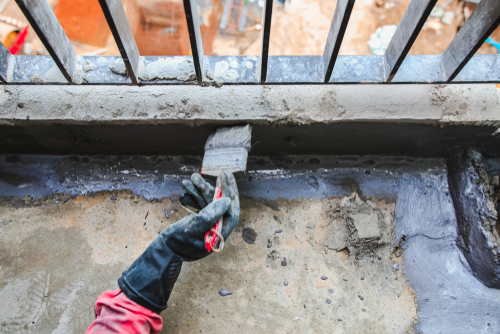
Step 2: Repair Cracks and Joints
Seal all visible cracks, tile gaps, and corner joints to stop water entry points.
Step 3: Create a Proper Slope
Ensure the balcony floor slopes slightly toward the drain so water flows out easily instead of collecting.
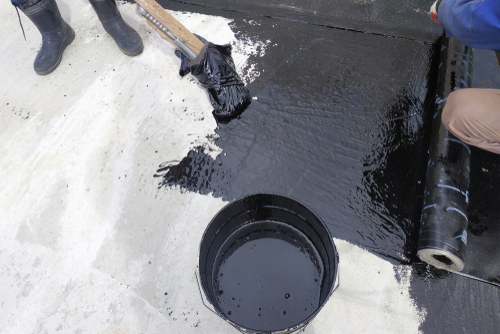
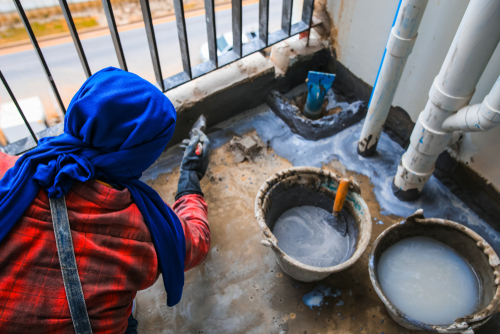
Step 4: Apply Waterproofing Layer
Apply the selected waterproof balcony flooring material evenly across the surface, corners, and drainage areas.
Step 5: Allow Proper Drying
Let the waterproofing layer dry completely before tiles or finishing materials are installed.
Step 6: Finish the Surface
Install balcony tiles or finishing layers carefully without damaging the waterproof layer underneath.
Worth Knowing! Light-coloured balcony tiles absorb less heat and help waterproof outdoor balcony flooring last longer by reducing surface expansion and cracks. |
A balcony may look perfectly fine on the surface, while moisture slowly affects the slab underneath.
Proper waterproofing of balcony floor systems protects your slab, tiles, walls, and ceilings from long-term moisture damage. Whether you are building a new balcony or renovating an old one, waterproofing done at the right time can save years of repair work later. A strong balcony is not built well on the surface. It is protected well underneath, too.
Liquid membrane and polyurethane systems are commonly considered the best waterproof balcony flooring options for exposed balconies and heavy rainfall areas.
Most waterproofing balcony floor systems last between 5 and 15 years, depending on the material used and weather exposure.
Yes, some waterproof outdoor balcony flooring systems can be applied directly over existing tiles if the surface is stable and undamaged.