


Share:
Home Building Guide
Our Products
Useful Tools
Home Building Guide
Products
Ultratech Building Products
Share:
The bearing capacity of soil shows how much weight the ground can hold without sinking.
Common safe bearing capacity of soil values: Hard rock (2000 t/m²), soft clay (100 kN/m²).
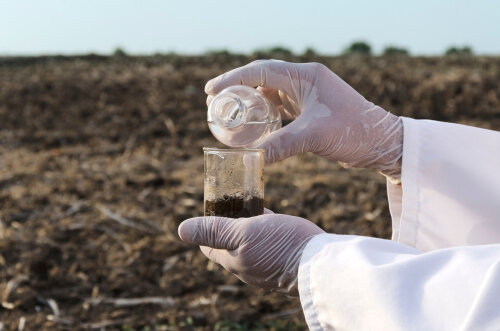
Test the soil before digging foundations for safe bearing capacity.
Water, depth, and soil type change bearing capacity.
Learn the bearing capacity of soil formula for basic checks.
Simple tests include plate load and penetrometer for homes.
Good bearing capacity starts at 150 kN/m² for houses.
Before any house rises from the ground, smart builders check what's underneath. Weak soil causes cracks, tilts, and costly fixes that empty savings. Strong soil holds steady for generations. That's where the bearing capacity of soil comes in; it guides foundation choices so your home stays level.
Arjun, a 34-year-old bank cashier who balances accounts all day, saves every rupee for his family's future. He lives with his wife, two kids, and parents in a small rented flat. When he started building his one-storey house, he felt both excitement and worry because his cousin's new home had sinking corners due to weak soil.
Arjun understood that bricks and cement were important. But the mason's advice to "test the bearing capacity of soil first" made him stop and think. Past floods in his area left him worried about soft, mushy ground. He needed a safe bearing capacity of soil so no cracks appeared under his family's feet. Arjun learned simple soil tests, understood the facts, and chose the right foundation design. Today, his house stands steady and strong.
Quick Tip: Always test the bearing capacity of soil before digging to save thousands later.
The bearing capacity of soil tells you exactly how much weight your ground can carry before it starts to sink or push sideways. Imagine standing on wet sand at the beach, and your foot sinks in. That's low bearing capacity. Dry hard ground holds your full weight; that's high bearing capacity.
For homes, we use the safe bearing capacity of soil, always much lower than the maximum. We take half (or less) to stay extra safe and avoid any sinking. This extra safety stops small movements or cracks over time. Most houses need 150-300 kN/m² to stay level.
Arjun discovered his plot had sticky clay soil. This meant bearing capacity was low, so he needed deeper and wider foundations to spread the house's weight safely. Bearing capacity keeps walls straight and floors flat for years.
Simple Check: Press your foot hard into soil. If it sinks easily, it has ow bearing capacity.
The bearing capacity of soil changes based on simple things around your plot. Understanding these helps you choose the right foundation depth and width for your house.
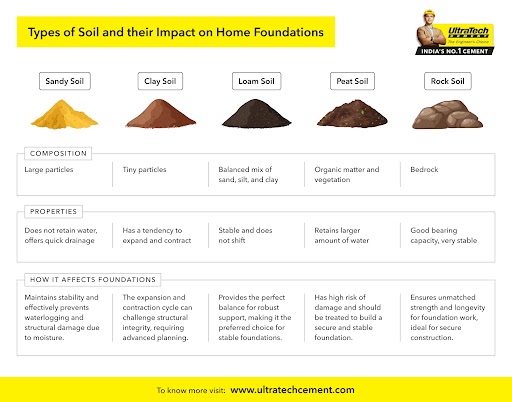
Soil type matters most: Rock holds the most weight, then gravel and sand, with clay being the weakest. Wet clay turns soft, losing much of its bearing capacity.
Water makes soil weak: Dry soil grips tight. Rain or floods reduce bearing capacity by half or more. Wet ground can't hold your home’s weight properly.
Depth changes strength: Surface soil often stays loose. Dig 1-2 metres down to reach stable layers with better bearing capacity.
Footing size spreads load: Narrow footings push hard on a small area (like standing on your toes). Wide footings spread weight and soil holds better.
Nearby slopes hurt soil: Ground near hill edges stays loose and weak. Stay 3-5 metres away from slopes for safe bearing capacity of soil.
Arjun's plot turned muddy during the rains, dropping its bearing capacity. He waited for dry weather and dug deeper to firm soil.
Here's a simple table:
Soil Type | Safe Bearing Capacity (kN/m²) |
Hard Rock | 2000+ |
Gravel | 400 |
Sand | 200-300 |
Clay (soft) | 100 |
Use this table to match your soil test results. Pick the foundation size based on the safe bearing capacity of soils. Arjun matched his clay soil (100 kN/m²) with wider footings to spread the weight safely.
Calculating the bearing capacity of soil seems confusing, but it's simple for home builders. Engineers use the bearing capacity of soil formula called Terzaghi's equation:
qu = cNc + γDNq + 0.5γBNγ
Don't worry about memorising it. Here's what each part means:
c = How sticky your soil is (clay sticks, sand slides)
γ = Weight of soil (heavier soil = stronger)
D = How deep you dig foundations
B = Width of your concrete footing
Nc, Nq, Nγ = Ready numbers from charts (your mason will know these)
Use soil test reports or local charts to avoid confusion Arjun's mason tested his clay plot and got 150 kN/m² as the safe bearing capacity of the soil.
Example: Your house weighs 100 tonnes total
You have 10 square metres of footings
100 tonnes ÷ 10 m² = 10 tonnes per m² (about 100 kN/m²)
If the soil holds 150 kN/m² safely, you're good
Check it works: Your needed bearing capacity (100 kN/m²) must stay below the soil's safe bearing capacity (150 kN/m²). Wider footings mean less pressure on the soil.
Arjun made footings 1.5m wide to spread his home’s weight safely across the clay soil.
Ready charts from masons or labs make this easy; no calculator needed for small houses.
Math Tip: Safe bearing capacity of soil = Maximum soil strength ÷ 3 (safety margin). Always use the lower safe number.
Soil bearing capacity tests determine how much load soil can safely support for foundations, preventing cracks or collapses in home construction..
1. Standard Penetration Test (SPT): Drill a borehole, lower a 50mm split-spoon sampler, and count hammer blows (63.5kg dropped 75cm) to drive it 30cm into soil at various depths. A higher N-value (blows) signals denser soil; pros convert to bearing capacity using formulas.
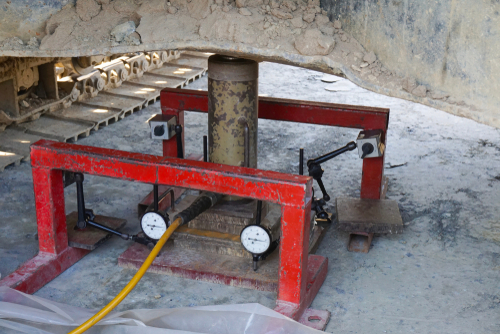
2. Plate Load Test: Place a 30-45cm steel plate on cleared ground at foundation level, then keep adding sandbags or hydraulic jacks while measuring settlement with a dial gauge. Stop at 25mm deflection to calculate ultimate capacity (e.g., 880 kN/m² raw, divided by a factor of safety 3 for a safe value of ~300 kN/m²); this test costs ₹5,000-10,000 through labs, ideal for shallow footings.
3. Cone Penetration Test (CPT): Push a 10cm² cone probe hydraulically into soil at 2cm/sec, recording tip resistance and friction. Provides continuous profiles for layered soils, more correct than SPT for sands.
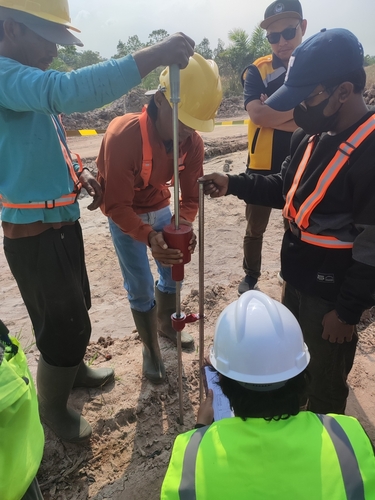
4. Pocket Penetrometer: Squeeze this handheld, spring-loaded device into a soil sample; unconfined compressive strength is read directly in kg/cm².
5. Dynamic Cone Penetrometer: Hammer a 20mm rod into soil, while noting down penetration per blow. This is easier than SPT for quick site checks, give you the direct bearing values.
Test 3-4 spots per plot (corners/centre) at the suggested foundation depth. Arjun's plate test report guided his raft design, saving redesign costs. Always hire certified labs for reports with safe bearing capacity (SBC) values.
Weak soil bearing capacity can cause foundation settlement or failure, but simple ground improvement methods can improve it.
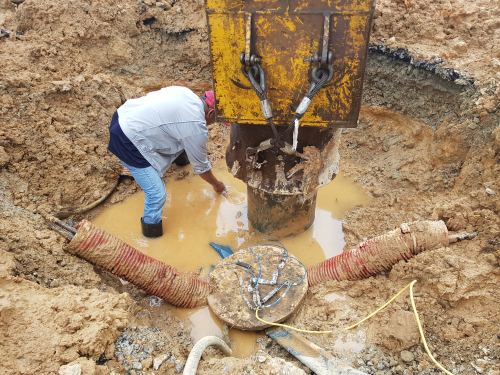
1. Go Deeper with Foundations: Dig deep through soft topsoil (e.g., 1-1.5m) to reach denser strata like gravel or bedrock, increasing overburden pressure for better compaction. Arjun reached the hard layer at 1.5m, increasing safe capacity from 100 to 200 kN/m².
2. Widen Footings: Expand base area (e.g., from 1m to 1.5m square) to spread load; bearing pressure halves with doubled width per Terzaghi's formula.
3. Compact the Soil: Use vibratory rollers, rammers, or sand slinging to achieve 95% Proctor density; this improves strength by 50-100% in loose fills. Pre-wet sandy soils for the best results.
4. Add Stone Columns: Drill 60-80cm holes 2-3m deep, fill with compacted gravel in 30cm layers. This creates stable composite columns, improving drainage and capacity by 2-3x.
5, Grout Loose Soil: Inject cement-sand mixture (1:1:6 mix) under 2-5 bar pressure through boreholes to fill gaps. This is ideal for fissured clays, gaining 30-50% strength in a week.
6. Easy Gravel Layer Fix: Spread 10-15cm crushed stone (20-40mm) under footings, compact in layers. This provides a simple 20-30% capacity improvement for black cotton soils and costs ₹500-1,000/m².
For extreme cases, driven piles transfer load to deep firm layers. Always retest post-improvement and use quality cement like UltraTech for concrete.
Easy Fix: Add a 10-15 cm gravel layer. Boosts bearing capacity by 20-30%.
Like Arjun, who turned his worry over his flood-prone plot into a rock-solid foundation, you've now got the full guide to make your home unbreakable from day one. He started with a simple foot-press check, spotting the clay's weakness, ran a ₹5,000 plate load test across four corners to nail down his 100 kN/m² SBC, then smartly compacted with gravel layers and dug 1.5m deeper to hit firm strata, widening footings based on Terzaghi's formula so his G+1 becomes crack-free, even in monsoons.
So, don't just build, build wisely. Test today, spread the load right, and watch your house stand tall against time, rain, or weak ground. Your family's future deserves a stable base.
Safe bearing capacity is the ultimate bearing capacity (max load before soil fails) divided by a factor of safety (usually 2-3 for homes). For example, if the plate load test shows an ultimate of 300 kN/m², apply FOS=3 for SBC=100 kN/m² to prevent sudden sinking or cracks. Labs report net SBC (after soil overburden is subtracted) for precise footing sizing.
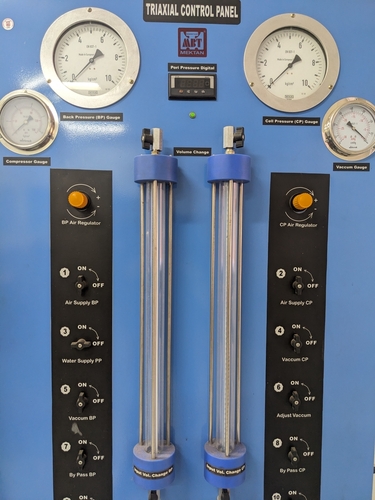
Bearing capacity measures surface load tolerance before sinking or failure under foundations. Soil strength ( parameters like cohesion 'c' and friction angle 'φ') stops internal sliding, tested via triaxial/unconfined compression. Both are related to each other with low strength, offering poor capacity.
150-300 kN/m² suits most Indian G+1/G+2 homes on gravelly/sandy soils. A bearing capacity of above 400 kN/m² (dense gravel/rock) is excellent for heavier loads. Below 100 kN/m² (soft clay/black cotton) requires fixes such as piles or stone columns. Mumbai sites often hit 150-250 kN/m² post-compaction.
Bearing capacity is the soil's ability to support structural weight per unit area without deformation. Bearing refers to this contact pressure; ultimate is the failure point, and safety is best for reliability.