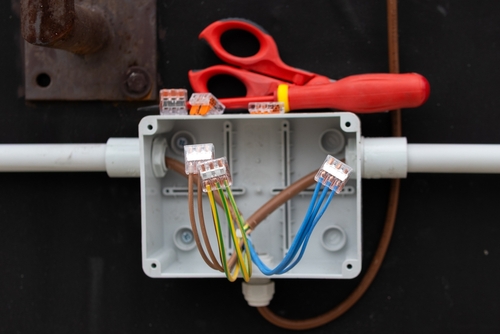
What Is a Junction Box and Its Uses
A junction box is a protective container where multiple electrical wires meet and connect safely. It prevents short circuits, keeps wires organised, and shields connections from dust, moisture, and external damage.
Understanding the uses of a junction box is important for safe home wiring.
- Protects wire connections from fire hazards
- Helps organise and manage multiple cables
- Keeps electrical joints safely enclosed
- Allows easy access for repair or inspection
- Improves overall electrical safety
Components of a Junction Box and How It Works
Each electrical junction box contains simple but essential parts that support safe wiring.
Main Components:
- Box enclosure
- Cable clamps
- Terminal connectors
- Cover plate
How It Works
A junction box works by housing the wire joints inside a sealed enclosure. Electricians connect wires using terminals or wire nuts and then cover the box to prevent accidental contact, ensuring safe power distribution.
Common Applications for Electrical Junction Boxes
An electrical junction box is used in many areas around the home.
- Ceiling light connections
- Fan and fixture installations
- Switchboard wiring
- Outdoor electrical points
- Appliance connection points
Different Types of Electrical Junction Boxes
There are multiple types of electrical junction boxes depending on placement and wiring needs.
- Surface-mounted junction box
- Flush-mounted junction box
- Waterproof junction box
- Metal and PVC junction boxes
How to Choose the Right Junction Box for Your Home
To choose the right junction box, consider your wiring capacity, location (indoor or outdoor), material durability, and safety standards. Picking the right size and type ensures long-lasting and safe electrical connections throughout your home.