


Share:
Home Building Guide
Our Products
Useful Tools
Home Building Guide
Products
Ultratech Building Products
Share:
A concealed beam is a beam placed inside the slab thickness.
It supports walls and partitions without creating a visible beam below the ceiling.
Proper concealed beam design and correct concealed beam size are important for safety.
It is commonly used in modern residential buildings to maintain flat ceilings.
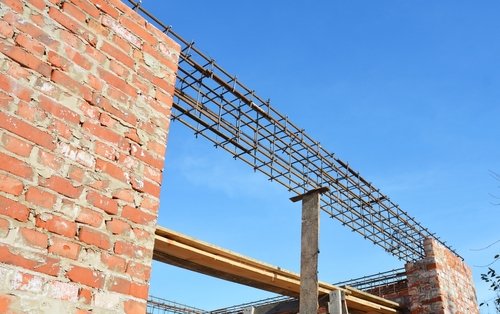
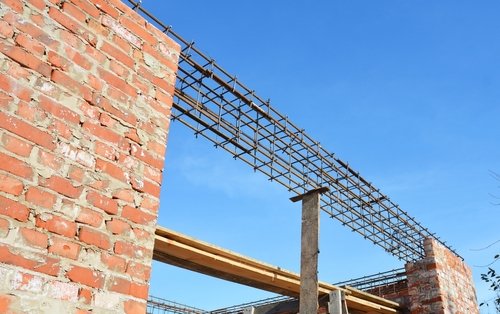
A concealed beam is a reinforced concrete beam that is placed within the slab instead of below it. Because it stays inside the slab depth, it is not visible from the ceiling.
In normal construction, beams are deeper than slabs and create a drop that can be seen from inside the room. A hidden beam avoids this drop and keeps the ceiling level and smooth.
Concealed beams are usually placed under brick walls or lightweight partitions built directly on the slab. Their job is to spread the load of the wall safely across the slab and reduce stress in one area.
Since the concealed beam size is smaller than a regular beam, it is mainly used for moderate loads and shorter spans. Proper design ensures the beam remains safe, stable, and crack-free.
Good to Know: Even though it is hidden, the beam still contains steel reinforcement like a regular beam. The main difference is that its depth is limited to the slab thickness. |
Every structural element has a specific role in construction. A concealed beam is mainly used to manage loads, improve slab performance, and maintain a clean ceiling design.
One of the main purposes of a concealed beam is to carry the load of brick walls or partitions built on the slab. Without support, the slab may develop cracks under concentrated loads. The concealed beam helps spread this load evenly.
A concealed beam makes the slab slightly stronger by acting as an internal support. Although it cannot replace large structural beams, it can support moderate spans and improve stability.
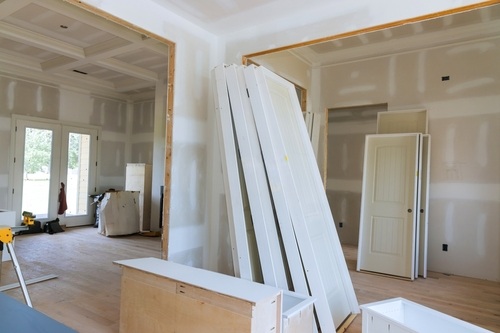
Traditional beams extend below the slab and create visible drops in the ceiling. A concealed beam stays within the slab thickness, keeping the ceiling flat and visually appealing.
| Tip: Discuss concealed beams with your architect during the planning stage. It is much harder to add them later. |
Because there are no beam projections, room layouts become easier to plan. Interior partitions, lighting, and furniture placement become more flexible.
Designing a concealed beam requires careful planning because the beam depth is limited by the slab thickness.
Engineers first calculate the loads acting on the beam. This includes wall loads, live loads, and slab loads. Accurate calculations make sure that the beam performs safely.
Since the beam sits inside the slab, its depth cannot exceed the slab thickness. Because of this, the slab must be thick enough to hold reinforcement and maintain structural strength.
Steel bars inside the beam must be properly placed and anchored. Overcrowding of reinforcement should be avoided so that concrete can flow and bond properly.
Using the right concrete grade and quality steel improves durability. Engineers also check deflection to make sure the slab does not sag or crack over time. A good concealed beam design requires proper calculations, detailing, and material selection.
| Tip:Proper reinforcement placement is important in concealed beams because there is limited space inside the slab. Poor detailing can weaken the structure. |
Concealed beams are mainly used where appearance and structural support both matter.
Hidden beams are common in modern houses and apartments. They support internal walls while keeping ceilings smooth and modern.
In offices, concealed beams support lightweight partitions without affecting the ceiling design. This creates a cleaner and more professional look.
During renovation work, concealed beams can strengthen structures without changing the existing ceiling appearance. This helps maintain the original design of the building.
Overall, concealed beams are useful when aesthetics and structural support need to work together.
Understanding the advantages of concealed beams helps decide when they should be used.
A concealed beam keeps the ceiling smooth and uninterrupted, improving the overall look of the space.
Because the beam does not hang below the slab, the room keeps its full height. This improves ventilation and natural lighting.
Designers can place partitions more freely since there are no beam drops affecting the layout.
Flat ceilings require less false ceiling work, which can reduce finishing time and cost.
While concealed beams offer many benefits, they also have some limitations.
Because the beam depth is limited, it cannot carry very heavy loads like a traditional beam.
Concealed beams need accurate calculations and proper reinforcement detailing to avoid structural problems.
If reinforcement or curing is not done correctly, cracks may appear in the slab.
For larger spans or heavy loads, conventional beams are usually a better option.
Tip: Never use concealed beams for large spans or heavy loads without professional structural analysis. Traditional beams may be safer in such cases.
A concealed beam is a practical solution for modern construction where both appearance and structural support are important. By staying within the slab thickness, it helps create a flat ceiling while still supporting walls and distributing loads.
But concealed beams must be carefully designed. Their size, reinforcement, and load capacity should be checked by structural engineers. When used in the right conditions, concealed beams in slabs can improve space planning, interior design, and overall building efficiency.
A concealed beam is added within the slab and does not drop below the ceiling, whereas a normal beam is visibly deeper than the slab. Normal beams carry heavier structural loads. Concealed beams are mainly used for partition load distribution and aesthetic purposes.
No, they are different. A concealed beam is fully integrated within the slab thickness, while an inverted beam is above the slab level. Their structural behaviour and applications are different based on the design.
Yes, a concealed beam in slabs is safe when properly designed and reinforced by a structural engineer. Correct load capacity, reinforcement detailing and quality construction offer durability and stability. Poor execution may compromise safety.
There is no single “best” beam type. The choice depends on structural requirements, span, load and architectural preferences. Concealed beams are suitable for aesthetic and light-load conditions, while normal beams are better for heavy structural demands.