


Share:
Home Building Guide
Our Products
Useful Tools
Home Building Guide
Products
Ultratech Building Products
Share:
Ponding curing helps concrete become strong by keeping it wet for enough time.
It works best on flat surfaces like floors, rooftops, and slabs.
Continuous water curing gives better strength than sprinkling or wet cloth methods.
Ponding curing needs regular checking to avoid water leakage or drying.
When done properly, it improves durability and reduces surface cracks over time.
Concrete curing time is important for the concrete to become strong. After concrete is laid on flat surfaces such as rooftops, floors, or open slabs, it needs regular watering to get strong.
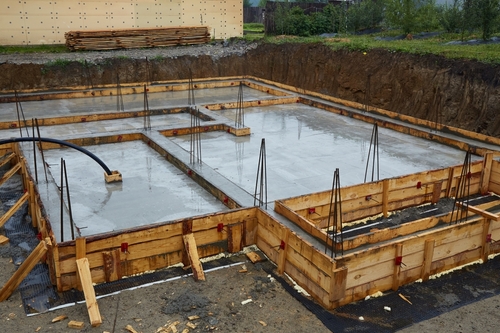
In the ponding method, you let water stay on the concrete surface for a fixed number of days. Small borders are made in a square shape so water does not flow away. This creates a shallow water layer, like a small pond, which is why it is called ponding curing. The water in the pond helps the concrete stay cool and moist, so it hardens slowly and evenly.
Concrete needs moisture to become strong. If it dries too quickly, it can lose strength and develop cracks. Ponding curing solves this problem by making sure there is continuous contact with water.
When water is present:
Cement particles react slowly and properly
Heat from drying is controlled
Surface remains cool and protected
This environment allows the concrete to harden evenly. That is why curing by ponding is trusted for quality construction work.
The ponding curing method offers many practical benefits:
1. Better Strength: Continuous water helps concrete gain better strength than sprinkling or using a wet cloth.
2. Lesser Surface Cracks: Ponding curing results in slow drying, reducing the risk of cracks.
3. Easy to Do: This method requires no special tools or machines.
4. Cost-Effective: Only water and simple borders are needed, making it an effective and affordable method.
5. Uniform Curing: As there is plenty of water used, the entire surface gets equal moisture.
6. Good for the Indian Climate: Works well in hot, dry weather.
Because of these benefits, many site engineers recommend pond cure concrete for flat surfaces.
The ponding curing method looks simple, but it must be done carefully. When done right, it helps concrete become strong evenly.
After concrete is laid on a flat surface, such as a rooftop or floor, water is not added right away. The surface is first allowed to set for a few hours. If water is added too early, the top layer can get washed away.
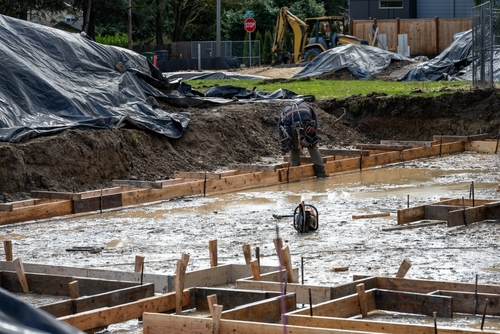
Once the surface is stable, small temporary barriers are made. These barriers can be created using mud, cement mortar, bricks, or sacks filled with sand. The aim is to stop water from flowing out and to hold it evenly across the surface.
Tip: Build strong mud or mortar edges around the slab to stop water from leaking out. |
Clean water is slowly poured onto the surface. Care is taken to avoid strong flow, as forceful water can damage the fresh concrete. The goal is to form a shallow, calm layer of water, just enough to cover the surface. The level is about 25 mm to 50 mm deep.
The water level must be maintained at all times. If water dries up due to heat or sunlight, more water is added. This continuous presence of water is what makes ponding curing effective.
Tip: In hot weather, keep checking water levels more often as evaporation happens faster. |
Ponding is usually continued for 7 to 14 days, depending on the cement type. During this time, regular checks are important to see if there is leakage or dry patches.
The exact duration depends on:
Type of cement used
Weather conditions
Thickness of concrete
By following these steps carefully, curing by ponding helps concrete harden slowly, evenly, and properly, resulting in a strong and durable surface.
Tip: Always use clean water for ponding curing so you don’t weaken the concrete surface. |
Ponding curing gives good results, but has some basic problems as well:
Needs regular checking
The borders made to hold water must be checked again and again. If they break or leak, the water flows out, and the concrete can dry too fast.
Requires extra effort on-site
Making the edges, keeping water filled, and removing everything later needs time and workers. This means more work for the workers.
The weather can affect curing
In very hot weather, the water dries up very fast. Workers have to fill the water many times.
Water removal after curing
Once curing is complete, the water has to be drained. This can create mud and make the site messy if not handled properly.
Only works on flat surfaces
Ponding curing can be done only on flat areas like floors, rooftops, and slabs. It cannot be used on walls or vertical surfaces.
Tip: Continue curing for at least 7 days to help concrete gain proper strength. |
Compared to sprinkling or covering with a wet cloth, the ponding method of curing provides continuous moisture. It keeps the surface evenly wet, which is difficult to do with manual watering.
Curing may look like a small step, but it has a big impact on how concrete performs over time. The ponding curing method is simple, affordable, and effective. It protects concrete during its most sensitive stage and helps it get strong properly. Curing by ponding uses basic resources, needs no complex tools, and delivers long-lasting results.
Ponding curing means keeping water on the concrete so it becomes strong slowly and evenly.
It is mainly used for cement flooring, slabs, and other flat concrete surfaces.
Usually 7 days, and can go up to 14 days for stronger results.
Yes, it works very well in hot conditions as it prevents fast drying.