About Us
Sustainability
Investors
Careers
Media
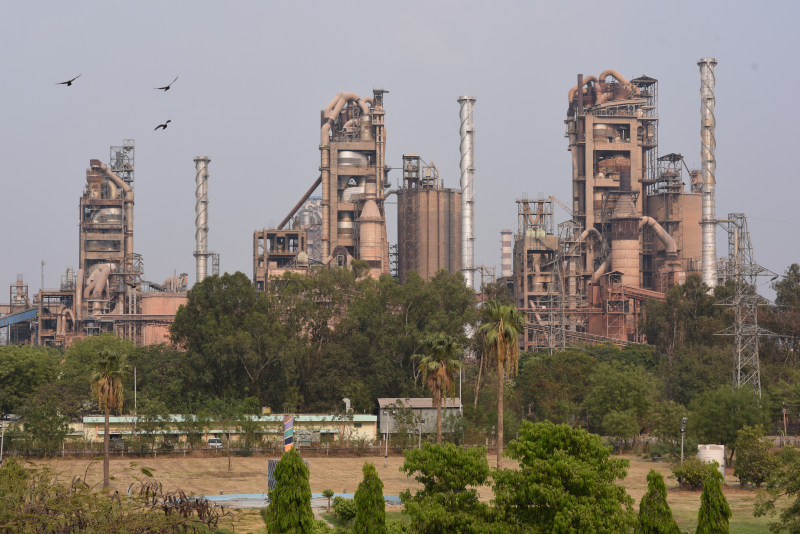
On World Environment Day, UltraTech Cement Limited, the world's largest cement company by sales volume and capacity, excluding China, reaffirms its unwavering commitment to advancing its sustainability efforts, rooted in responsible growth, resource efficiency, and climate action.
As UltraTech crosses the landmark milestone of 200+ MTPA of installed cement manufacturing capacity in India, this achievement also carries with it an important imperative. For a company whose footprint touches every corner of India's infrastructure and people in the remotest corners of the country, scale is not simply a measure of output, scale is responsibility. As UltraTech grows in scale and impact, sustainable choices must guide every level of expansion.
Climate Action and the Energy Transition
A cornerstone of UltraTech’s sustainability journey is the accelerated transition to green energy. Having already achieved its EP100 commitment to successfully double energy productivity from the base year 2010, the Company has continued harnessing green energy as a driver for sustainable growth.
UltraTech’s total green energy capacity is over 1,800 MW, including over 1.39 GW of renewable energy (RE) and 414 MW of waste heat recovery systems (WHRS). 371 MW of RE and 63 MW of WHRS capacity was commissioned during FY26, allowing UltraTech to achieve a green power mix of 35.8% for the same period. As part of its RE100 commitment, UltraTech targets to meet 100 per cent of its electricity requirement through renewables sources by 2050.
UltraTech is also advancing next-generation decarbonisation solutions. In 2025, the Company operationalised a 7.5 MW round-the-clock hybrid renewable energy project at its integrated cement manufacturing unit, Sewagram Cement Works, in Gujarat, integrating solar and wind energy alongside battery storage to provide consistent and reliable green power to the unit.
The Company is collaborating with IIT Madras and BITS Pilani Goa as the knowledge partners in development of indigenous CCU-based technology for decarbonisation of the Indian cement industry. This project is being undertaken under the aegis of the Department of Science and Technology, Ministry of Science and Technology, Government of India with UltraTech as the industrial partner.
Sustainability Progress in FY26
UltraTech’s has made significant progress on its five sustainability focus areas of Decarbonisation, Energy Transition, Circular Economy, Water Management, and Biodiversity.
Decarbonisation
UltraTech continues to reduce its carbon footprint across the value chain of its operations. The Company’s gross CO₂ emission intensity decreased to 578 kg/tonne of cementitious products in FY26, in line with its stated target of a 27% reduction in carbon emission intensity by 2032. It had also earlier stated its intent to not invest any further in thermal power capacity as part of its capacity expansion projects, thus further reducing its dependence on fossil fuels. UltraTech has also committed to the GCCA 2050 Cement and Concrete Industry Roadmap for Net Zero Concrete.
UltraTech is also scaling the use of electric vehicles in its operations, and in FY26, inducted India’s first PM E-DRIVE‑certified electric heavy‑duty truck into its logistics operations. The Company was among the first in India to introduce ‘Green Logistics’, deploying CNG trucks in 2021, LNG trucks in 2022, and electric trucks in 2024. The Company continues to partner closely with its logistics providers to transition from diesel to cleaner fuels.
UltraTech also engages with external partners to accelerate innovation, such as its partnership with the Institute for Carbon Management (ICM) at the University of California, Los Angeles (UCLA) to pilot Zero Carbon Lime (ZeroCAL). This technology can eliminate nearly 98% of carbon dioxide emissions associated with limestone decomposition in cement manufacturing, and reduces UltraTech’s dependence on thermal energy for pre-heater operations.
Circular Economy
UltraTech aims to enhance circularity in its business operations, reducing the need for virgin raw materials and fuels, thereby lessening its environmental impact and lowering its ecological footprint. To prevent and mitigate overutilisation of resources, as well as increasing material costs and the disposal of waste generated through these, UltraTech has implemented robust systems at our unit locations to utilise waste materials safely.
The Company utilised 49.83 million tonnes of recycled and alternative raw materials in cement production in FY26, helping to prevent waste from ending up in landfills. It achieved a thermal substitution rate (TSR) of 6.6% during the year, further solidifying the Company's dedication to sustainability.
As part of UltraTech’s circular economy initiatives, UltraTech and Hindustan Petroleum Corporation Limited (HPCL) signed a Memorandum of Understanding in January, 2026, to collaborate to reprocess used lubricating oils generated from UltraTech’s manufacturing units into high‑quality re‑refined base oil by HPCL. As a part of the pilot, HPCL will also explore development of finished lubricants using re-refined base oil to meet UltraTech’s performance specifications.
Water Management
UltraTech’s water conservation initiatives are based on its belief of the criticality of water as a shared resource, that is essential for business operations as well as the wellbeing of community and biodiversity. UltraTech’s water management efforts encompass areas within unit premises as well as beyond the fence, i.e. within the communities the Company operates in. In FY26, the Company conserved over 143 million cubic meters of water, achieving a 5.8 times water positive status.
UltraTech takes a multi-pronged approach to water conservation within its manufacturing units, including water harvesting interventions such as turning exhausted mine pits into reservoirs and building roof-top rainwater harvesting structures in addition to the increased use of recycled water, helping to increase water efficiency in manufacturing operations. UltraTech has also set up Zero Liquid Discharge (ZLD) plants at 100% of its facilities to enable the reuse of 100% treated water within the units.
UltraTech works to positively impact the environment and communities it operates in. For example, UltraTech’s integrated manufacturing unit, Vikram Cement Works, in the Chitakheda region of Neemuch district, Madhya Pradesh, has constructed 67 water harvesting structures in 2025, including 65 check dams, two farm ponds, and several hectares of continuous contour trenches across five villages near the plant.
Biodiversity
Biodiversity management forms an integral part of UltraTech’s sustainability strategy. Guided by the Aditya Birla Group Biodiversity Policy, the Company is committed to achieving No Net Loss to biodiversity by 2050. Across its manufacturing footprint, UltraTech has adopted a multi-pronged approach to conserve and enhance biodiversity through greenbelt development, habitat restoration and the adoption of nature-based solutions.
UltraTech has also adopted a science‑based approach to assess and mitigate biodiversity risks across its operations. In FY19, UltraTech committed to biodiversity risk and impact assessments across all its 24 integrated units, reinforcing its commitment to responsible business practices. By FY25, UltraTech had completed biodiversity assessments across all 24 of its operational integrated units, each conducted within a 10 km radius of the site. Having met this target, UltraTech has since expanded its focus to include recent mergers, acquisitions and greenfield and brownfield projects. With this, as of FY26, 68% of UltraTech’s integrated units have Biodiversity Management Plans (BMPs) that align with its commitment to achieving ‘No Net Loss’. Additionally, 100% of the quarries at UltraTech’s integrated facilities possess comprehensive and strategically developed rehabilitation plans.
Among these, Miyawaki plantations have emerged as a high-impact intervention, enabling rapid creation of dense, native mini-forests in limited spaces while enhancing local biodiversity and ecosystem resilience. By prioritising indigenous species, close planting densities, and accelerated soil preparation, these plantations help enhance local biodiversity as well as improve carbon sequestration. Recognising these benefits, UltraTech has progressively integrated Miyawaki plantations alongside its conventional greenbelt programmes. UltraTech’s integrated manufacturing unit Dalla Cement Works located in Sonbhadra, Uttar Pradesh represents the Company’s most recent large-scale deployment of Miyawaki plantations in UltraTech units. Since FY24, Dalla Cement Works has implemented Miyawaki plantations across two hectares of its limestone mining area, planting over 63,000 saplings under the Miyawaki method, and an additional 12,000 saplings under the unit’s conventional greenbelt development programme.