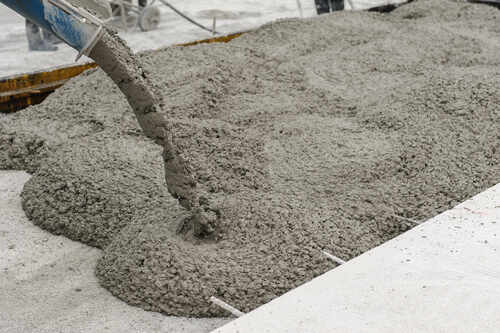
PPC stands for Portland Pozzolana Cement, a type of cement made by blending clinker (created by heating limestone and clay) with gypsum and pozzolana materials like fly ash or volcanic ash. The addition of pozzolana enhances the strength and durability of the cement, making PPC cement a more robust option compared to regular Ordinary Portland Cement (OPC).
Factors That Make PPC Cement Suitable for Home Construction
Top ten factors that make PPC cement the best type of cement for home construction:
Solid and Durable: The strong compressive strength of PPC cement ensures long-lasting structures that remain sturdy and stable for future generations.
Eco-friendly: PPC cement is an environmentally friendly alternative to conventional cement because it has a lower carbon footprint.
Reduce Heat Generation: Lower heat hydration minimises cracking during the curing process.
Easy Workability: PPC cement’s fine particles produce a smoother and more cohesive mix, which reduces the possibility of honeycombing or segregation in the concrete.
Weather Resistance: It is highly resistant to aggressive surroundings and extreme weather conditions. It is well suited to coastal and high-humidity environments.
Durability: PPC cement considerably minimises the probability of alkali-aggregate reactions, lowering the risk of chemical reactions that could weaken the structure.
Waterproofing: PPC cement has excellent impermeability which prevents water seepage and moisture-related damage.
Cost-Effective: PPC cement’s durability and long-term performance decrease maintenance expenses.
Additional Tips to Use PPC Cement for Homebuilding
Proper Storage: Store PPC cement in a dry, enclosed area to prevent moisture absorption and maintain its quality.
Mixing Ratios: Follow the recommended cement-to-sand ratios to achieve optimal strength.
Curing Process: Proper curing is essential to maximise the durability of PPC cement.
Soundness Test of Cement to Ensure Cement Quality| UltraTech Cement
Soundness Test of Cement to Ensure Cement Quality| UltraTech Cement
Discover the importance of the soundness test of cement and learn what is soundness of cement. Ensure your construction projects stand the test of time with our detailed Blog.
Calculation Guide for M25 Concrete Mix Ratio | UltraTech
Calculation Guide for M25 Concrete Mix Ratio
M25 concrete mix ratio is essential for structural concrete in construction. Learn to calculate the perfect M25 ratio with aggregates and water for optimal strength.
10 West Facing House Vastu Tips, Remedies & Benefits | UltraTech Cement
10 West Facing House Vastu Tips, Remedies & Benefits
Explore Vastu for west facing house, including essential tips, remedies, and benefits. Learn effective Vastu corrections and design ideas for west facing house plans of different sizes.
Tools
Cost Calculator
Every home-builder wants to build their dream home but do so without going over-budget. By using the Cost Calculator, you’ll get a better idea of where and how much you might end up spending.
EMI Calculator
Taking a home-loan is one of the best ways to finance home-building but home-builders often ask how much EMI they’ll need to pay. With the EMI Calculator, you can get an estimate that will help you better plan your budget.
Product Predictor
For a home builder, it is important to find the right store where one can get all the valuable information about home building. Use the Store Locator feature and visit our store for more information on home building.
Store Locator
It is important for a home builder to select the right products during the initial stages of constructing a home. Use the Product Predictor to see which products will be needed while building your home.