


Share:
Home Building Guide
Our Products
Useful Tools
Home Building Guide
Products
Ultratech Building Products
Share:
Density of concrete is the weight of concrete per unit volume and is usually measured in kg/m³.
The typical density of concrete used in house construction is around 2400 kg per cubic metre, which provides good strength and durability.
Knowing what the density of concrete is helps in calculating structural load and ensures safe foundation and slab design.
The weight of concrete per m³ directly affects the dead load of a building, affecting foundation size and safety.
Checking density regularly provides consistent strength and reduces the risk of cracks, seepage, and structural weakness.
Concrete density means the mass of concrete per unit volume. In technical terms, it is called mass density concrete. Most people understand it as the weight of concrete per cubic meter. When someone asks what the density of concrete is, the common answer lies between 2200 kg/m³ and 2500 kg/m³ for normal concrete.
The density of cement in kg/m³, aggregates, water, and admixtures together decides the final density of concrete. Heavier concrete usually means higher strength, but that is not always true if the mix is poor.
Tip: Do not judge concrete quality only by weight; proper mix design is equally important. |
Concrete density directly affects:
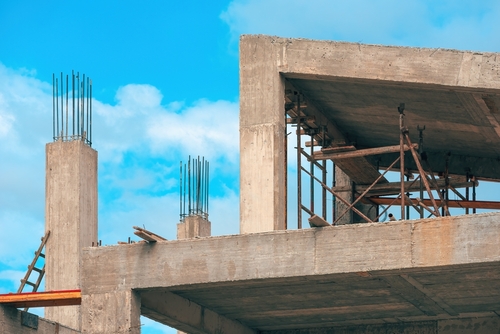
Load on foundations
Size of columns and beams
Overall building safety
If the weight of concrete per m³is higher than expected, it increases the dead load. If it is too low, it may indicate gaps or poor compaction.
Tip: Proper vibration during concreting helps achieve the right density. |
The density of concrete impacts how other materials behave. Steel reinforcement, for example, works best when concrete has proper density. Low-density concrete may crack easily, while overly dense concrete may increase cost and structural load.
Knowing how to calculate the density of concrete is useful for engineers and site supervisors. The formula is simple:
Density = Mass ÷ Volume
This gives the concrete density kg/m³.
Tip: Always use dry weight when calculating density for accuracy. |
1. Measure the volume of concrete (in cubic metres)
2. Measure the total weight of the concrete
3. Divide weight by volume
This gives the weight of concrete per cubic meter.
Common tools include:
Weighing balance
Measuring moulds
Laboratory testing equipment
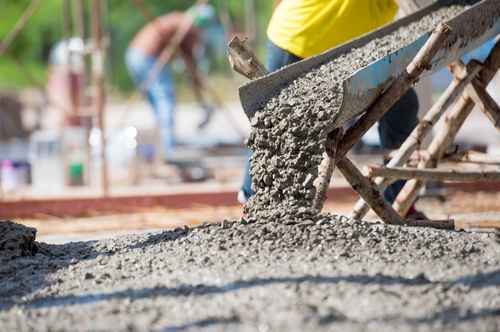
Ready-mix plants often check the mass density of concrete before delivery.
Tip: Ask for test reports when using RMC (ready-mix concrete). |
Several factors influence the typical density of concrete, such as:
Type of aggregates
Water-cement ratio
Compaction quality
Air content
Even small changes in material quality can change the weight of concrete per m3.
Tip: Avoid adding extra water at the site, as it reduces density and strength. |
Understanding what the density of concrete is helps in planning a safe and economical construction. It supports better decision-making at every stage of building.
Structural engineers calculate loads based on concrete density kg/m³. Incorrect calculations can lead to unsafe designs or over-designed structures.
The weight of concrete per cubic meter adds to the dead load of the building. This affects foundation size and soil bearing pressure.
Different works require different densities. Foundations need normal or high-density concrete, while partitions may use lighter mixes.
Proper density of concrete ensures fewer gaps, better bonding, and higher durability. This protects concrete from water seepage and cracking.
Maintaining consistent and equal mass density concrete across pours ensures strength throughout the structure.
The typical density of concrete depends on its type. Normal concrete usually has the standard range suitable for most homes.
Normal concrete: 2200–2500 kg/m³
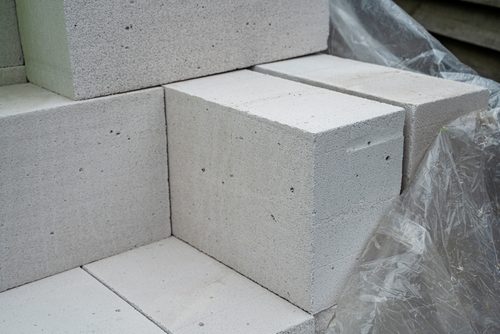
Lightweight concrete: below 2000 kg/m³
Heavyweight concrete: above 2600 kg/m³
These values relate to the weight of concrete per m³.
Density changes due to:
Aggregate size
Aggregate type
Mixing method
Curing process
Even the cement quality affects the density of cement in kg/m³ within the mix.
Concrete density plays an important role in the strength, durability, and performance of any structure. Understanding the density of concrete helps builders and homeowners choose the right mix for different construction needs.
By selecting the correct concrete type and maintaining proper mixing, placing, and curing practices, construction quality can improve greatly.
Yes, by changing materials, mix design, or compaction methods, the density of concrete can be adjusted.
Density directly decides the weight of concrete per cubic meter. Higher density means heavier concrete.
For normal concrete, the concrete density kg/m3 is usually around 2400 kg/m³.
Yes, proper mass density concrete generally results in better strength and durability.
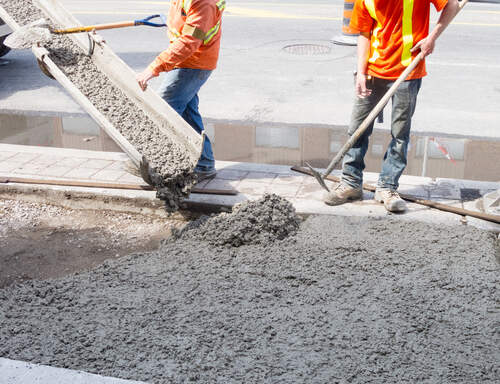
RMC usually has a typical density of concrete between 2300 and 2500 kg/m³, depending on design.