


Share:
Home Building Guide
Our Products
Useful Tools
Home Building Guide
Products
Ultratech Building Products
Share:
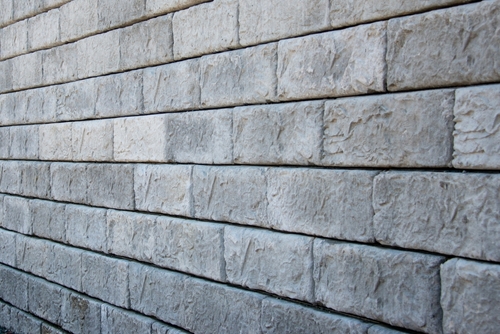
Solid blocks are built for strength that lasts for decades.
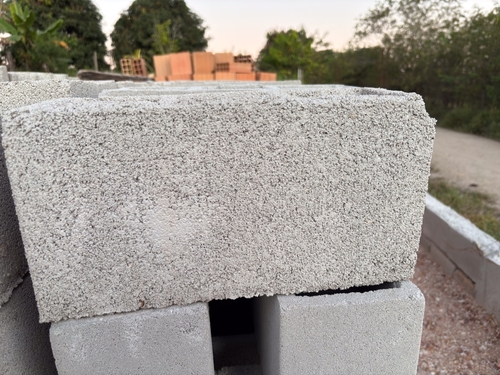
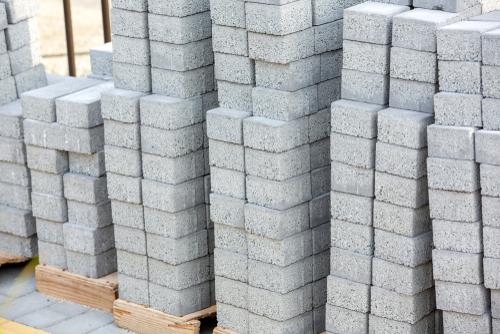
They have no gaps, no holes, no empty spaces and are filled inside. These blocks are dense, heavy, and built to carry heavy loads without bending or cracking.
They are made by mixing a few simple ingredients, such as cement, sand or stone dust, aggregates, and water. They’re pressed together into a mould to form a hard rectangular shape.
Once the mix is poured into a mould, it is pressed tightly with machines and then left to dry, called "curing" for several days. The result is a block that is completely solid from edge to edge, with no gaps inside.
The standard size of a solid block is usually 400mm x 200mm x 200mm, though sizes can vary.
Solid blocks help your homes stand firm for decades.
Here is why many builders prefer solid bricks for certain types of construction:
No material is perfect.
Solid blocks have a few drawbacks you should be aware of before deciding.
A block with holes can actually be smarter than a block without holes, if used in the right place.
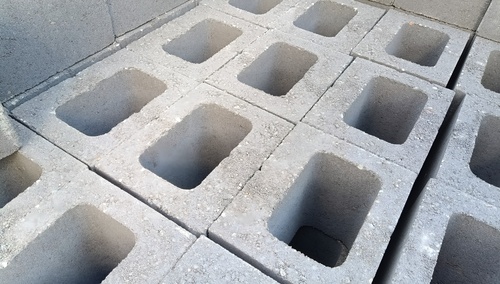
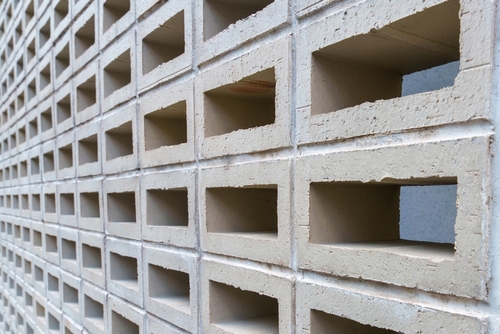
Hollow blocks are exactly what the name says, blocks with empty holes or ‘cavities’ running through them. These holes are not a sign of weakness. They are intentionally designed and serve many useful functions.
Hollow ones are made from the same basic materials as solid ones. The only difference is in the mould.
The mould for these blocks has raised parts inside that create holes as the concrete is pressed. So when the block comes out, it has two or more empty tubes running through it from top to bottom.
How much of the block is hollow?
Typically, 25% to 50% of the block's total volume is empty, depending on the design.
The standard size of a hollow concrete block is usually 400mm x 200mm x 200mm, with the same outer dimensions as solid ones but lighter due to the internal voids.
Hollow blocks are popular, and for good reason. Here's why builders and homeowners prefer them.
Hollow blocks have their limits, too. Here's where they fall short:
Now that you know both types well, here's a simple side-by-side comparison of hollow concrete blocks vs solid concrete blocks so you can compare them at a glance.
Feature | Solid Block | Hollow Block |
Weight | Heavy | Light |
Strength | Very high | Moderate |
Heat Insulation | Poor (walls get hot) | Good (stays cooler) |
Sound Insulation | Excellent | Moderate |
Cost | Higher | Lower |
Construction Speed | Slower | Faster |
Load-Bearing Capacity | High (ideal for structural walls) | Medium (suitable for non-load walls) |
Foundation Load | More pressure on the foundation | Less pressure |
Wiring/Plumbing | Difficult (need to chip the wall) | Easy (use hollow spaces) |
Best Use | Load-bearing, boundary, and basement walls | Partition walls, upper floors |
Fire Resistance | High | Moderate |
Use solid concrete blocks in the right place, and your home will stand strong for 50+ years.
They are meant for places where a wall must carry weight or provide protection. Here are the right places to use solid blocks:
Foundation walls and basement walls: These walls carry the entire weight of the building above. Solid concrete blocks are ideal here because they don't compress or crack under pressure.
Load-bearing walls: In homes without columns and beams (called load-bearing structures), the walls themselves carry the weight of the roof and upper floors. Only solid blocks should be used here.
Boundary walls and compound walls: If you want your boundary wall to be strong, hard to break through, and long-lasting, solid types are the right choice.
Walls in areas with heavy rainfall or floods: Water can slowly damage hollow bricks over time. In flood-prone or very wet areas, solid ones hold up better.
Ground floor walls in heavy structures: If you're building a multi-storey home (2 or more floors), the ground floor walls face more pressure. Solid types handle this well.
Use solid concrete blocks in load-bearing areas of your home to avoid unnecessary costs.
Using hollow blocks throughout your home can weaken it.
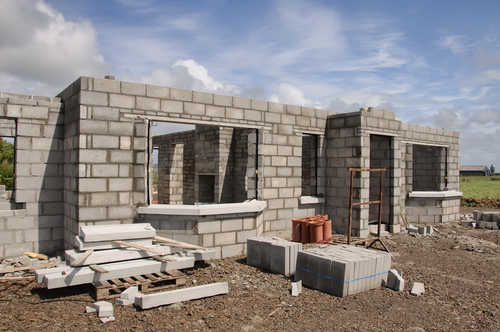
You don't need solid brick walls throughout your home. Using hollow bricks in the right places can save you money without compromising your home's integrity.
Hollow blocks are best used where the wall doesn't need to carry heavy loads, but still needs to divide spaces, reduce heat, or support light finishes.
Here are the right places to use hollow ones:
You don’t have to make your home with a single type of block; using different types will give you better results.
Your contractor may not always know what's best for your budget, climate, or home type.
Here is a simple guide to help you decide based on your own situation.
This is the most important factor. Always ask this first: "Is this wall going to carry weight?"
If yes, use solid ones; if not, hollow blocks are fine.
Situation | Recommended Block |
The wall carries the weight of the roof or floor above | Solid concrete block |
The wall is just dividing two rooms inside | Hollow concrete block |
Ground floor wall in a multi-storey building | Solid concrete block |
Upper floor partition wall | Hollow concrete block |
Boundary wall | Solid concrete block |
Infill wall in a column-beam frame structure | Hollow concrete block |
If the wall supports something, go solid. If it just divides a space, go hollow.
Building a home is not just about strength and design; your budget matters just as much.
Hollow blocks use less raw material, so they cost less per piece. But solid ones may cost more and add more load, which may mean you need a stronger (and more expensive) foundation.
The trick is to follow mixed construction. Use solid type only where needed (load-bearing walls, boundary walls) and hollow blocks everywhere else. It's a smart, cost-effective approach many builders follow.
India has very different climates in different regions. What works in Shimla may not work in Chennai. Your local climate should influence which block you use, especially for external walls.
Use hollow: For hot, dry, and humid climates.
Use Solid: Cold, chilly, flood-prone, cyclone- and heavy-storm regions.
There is no single "best" block for every situation.
Solid blocks are stronger, more durable, and better for walls that carry weight or need extra protection. But they cost more, feel hotter indoors, and take longer to build with.
Hollow blocks are lighter, cheaper, and faster to use. They keep your home cooler and make electrical and plumbing work easier. But they shouldn't be used in walls that carry heavy loads.
The smartest approach is to use both in the right places.
Solid concrete blocks are stronger than hollow ones. Because solid ones have no empty spaces inside, they can carry more weight without cracking or breaking.
Yes. Hollow bricks are cheaper than solid bricks, both in material and labour costs.
Generally, no. Hollow blocks are not recommended for walls that carry heavy loads, such as ground-floor walls in a multi-storey building or walls that directly support a roof.
It depends on your home's design, your budget, and your local climate. For most Indian homes, a combination works best: solid for load-bearing and boundary walls, and hollow for interior partition and upper-floor walls.