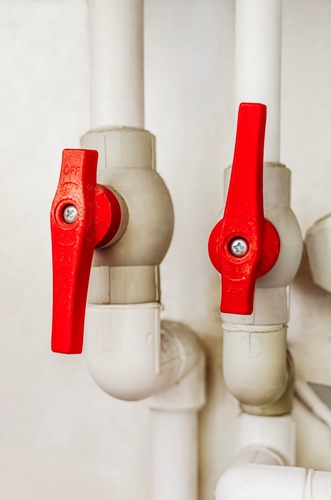
A ball valve is a device used to control the flow of water, gas, and other fluids in plumbing and industrial systems. It is known for its ease of operation and strong sealing capability.
What Is a Ball Valve and Its Uses
A ball valve is a type of quarter-turn valve that uses a rotating ball with a hole (bore) to control the flow.
When the hole is aligned with the pipeline, fluid passes through; when rotated 90 degrees, the flow is blocked.
Components of a Ball Valve and How It Works
1. Body (Housing): The main part that holds all internal components and connects to the pipeline.
2. Ball: A spherical part with a central hole that rotates to allow or block flow.
3. Seat: Seals the ball to prevent leaks and ensure a tight shut-off.
4. Stem: Connects the ball to the handle or actuator, allowing rotation.
5. Handle: Used to manually turn the valve open or closed.
Uses of Ball Valve in Water and Gas Systems
Some of the uses of ball valves are:
1. Residential plumbing for water supply lines.
2. Gas pipelines for safe shut-off.
3. Industrial systems for liquids and gases.
Meaning of Ball Valve and its Mechanism
The ball valve regulates flow by aligning or blocking the bore with the pipeline. When the bore is open, fluid flows freely; when closed, flow is completely stopped. This makes ball valves ideal for on/off applications rather than precise flow control.
FAQ
1. How do ball valves differ from gate valves?
Ball valves use a rotating ball for quick on/off control, while gate valves use a sliding gate for gradual flow control and are less suited for frequent use.
2. Can a ball valve be used for hot water?
Yes, ball valves can be used for hot water, provided they are made from suitable materials that can withstand high temperatures.